trial and error — A method of solving a problem by trying different approaches and learning from the mistakes made, until finding one that works.
Part of speech: NOUN
Definition: A method of solving a problem by trying different approaches and learning from the mistakes made, until finding one that works.
Pronunciation (IPA): /ˈtraɪəl ənd ˈerər/
Example Sentences
- The scientist invented the light bulb after thousands of trials and errors.
- My cooking skills improved a lot through trial and error—mostly error, if I'm honest.
- Learning a new language often involves a lot of trial and error, especially with pronunciation.
trial and error
NOUN[/ˈtraɪəl ənd ˈerər/]
A method of solving a problem by trying different approaches and learning from the mistakes made, until finding one that works.
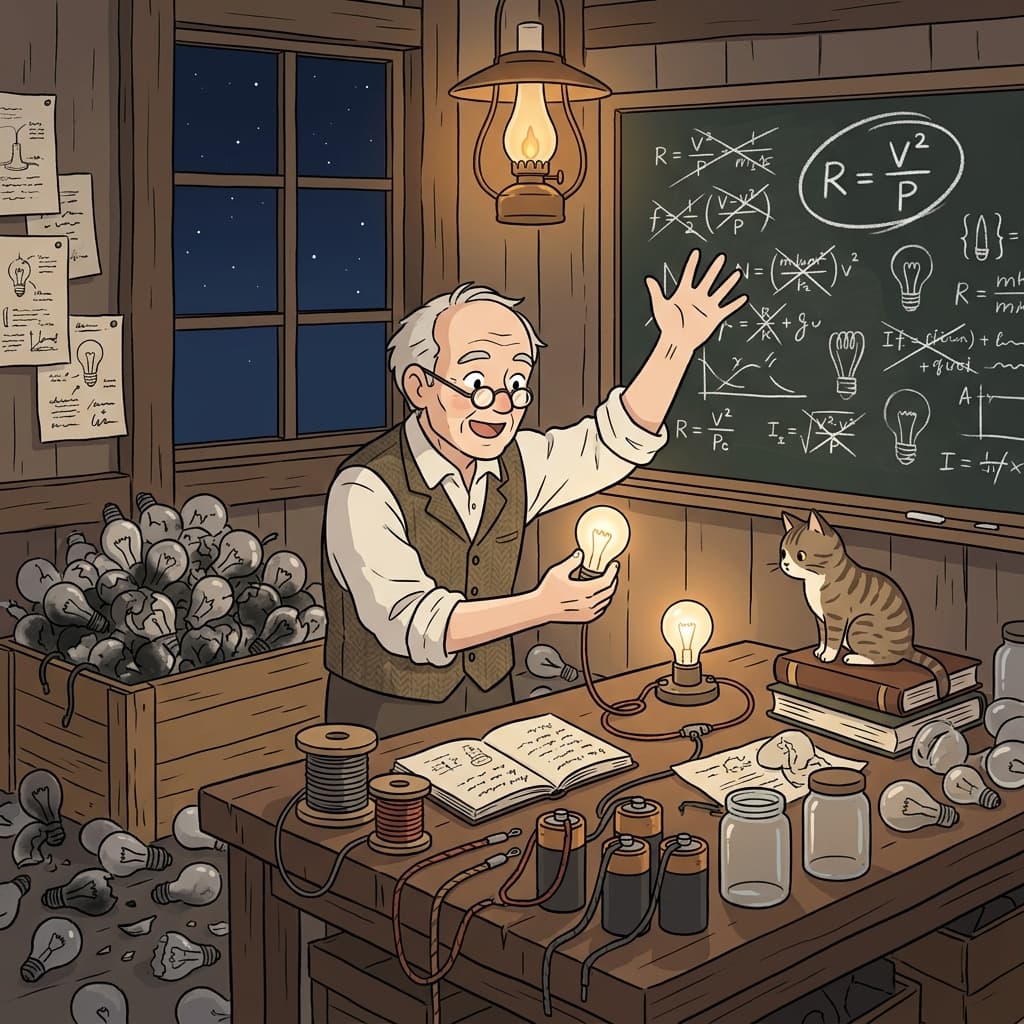
The inventor learns through trial and error, testing bulb after bulb until one finally glows.
Got the picture? Now let's practice.
🎤Pronunciation
🌳Etymology
Origin
The phrase emerged in 19th-century scientific and psychological writing to describe a method of learning through repeated attempts and mistakes, notably used by psychologist Edward Thorndike in animal learning experiments.
Breakdown
trial (an attempt, from Old French 'trier' - to try/sift) + and (conjunction) + error (a mistake, from Latin 'errare' - to wander/err)
🎵Rhyme
🔗Collocations
📝Examples
“The scientist invented the light bulb after thousands of trials and errors.”
“My cooking skills improved a lot through trial and error—mostly error, if I'm honest.”
“Learning a new language often involves a lot of trial and error, especially with pronunciation.”
“He assembled the IKEA furniture through pure trial and error, ending up with three extra screws and a wobbly table.”
“The startup's success came from years of trial and error in the market.”
📚Related Words
Want to master 27,000+ words?
Sign up free for flashcards & quizzes.