smirk — a smug, conceited, or silly smile
Part of speech: NOUN
Definition: a smug, conceited, or silly smile
Pronunciation (IPA): /smɜːrk/
Example Sentences
- The villain's smirk disappeared when the hero showed up unexpectedly.
- My cat has a permanent smirk, like it knows all my embarrassing secrets.
- He couldn't help but smirk when his younger brother got scolded for the same mistake he made yesterday.
smirk
NOUN[/smɜːrk/]
a smug, conceited, or silly smile
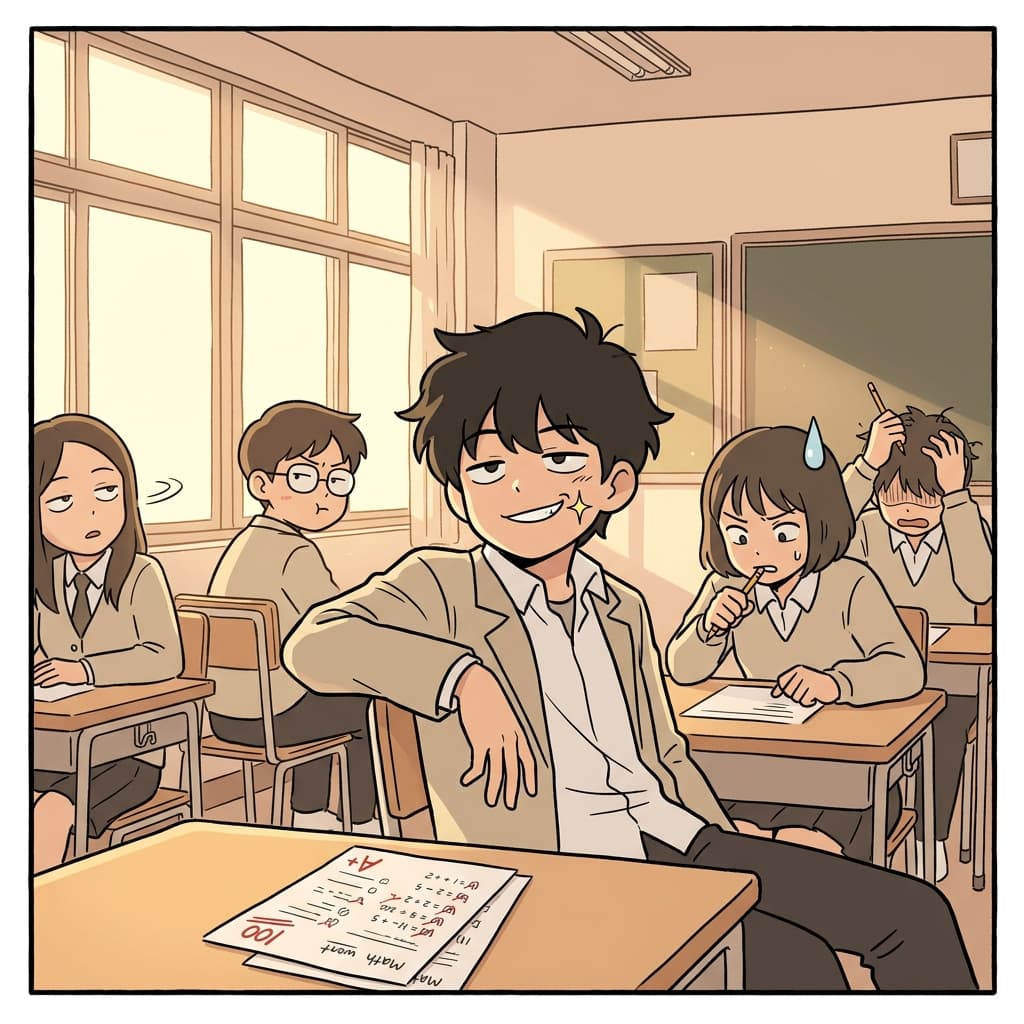
He gave a smug smirk after solving the puzzle first.

The lazy clerk won't work, just smirk!
Got the picture? Now let's practice.
🎤Pronunciation
🌳Etymology
Origin
From Old English 'smercian' meaning to smile or laugh. The word evolved through Middle English with influences from Old Norse, developing its modern sense of a smug or conceited smile by the 16th century.
Breakdown
smirk (base word) - cannot be further broken down into productive morphemes; the word is a simple lexeme from Germanic roots meaning to smile in a particular manner
🎵Rhyme
🔗Collocations
📝Examples
“The villain's smirk disappeared when the hero showed up unexpectedly.”
“My cat has a permanent smirk, like it knows all my embarrassing secrets.”
“He couldn't help but smirk when his younger brother got scolded for the same mistake he made yesterday.”
“The student's smirk after cheating on the test didn't last long when the teacher announced a makeup exam.”
📚Related Words
Want to master 27,000+ words?
Sign up free for flashcards & quizzes.