paraphrase — to express the meaning of something using different words, especially to make it clearer or shorter
Part of speech: VERB
Definition: to express the meaning of something using different words, especially to make it clearer or shorter
Pronunciation (IPA): /ˈpærəfreɪz/
Example Sentences
- When my mom asked if I cleaned my room, I paraphrased 'organized chaos' as 'creatively arranged.'
- The teacher asked us to paraphrase Shakespeare, but 'To be or not to be' became 'Should I exist or take a nap?'
- Students need to learn how to paraphrase sources properly to avoid plagiarism.
paraphrase
VERB[/ˈpærəfreɪz/]
to express the meaning of something using different words, especially to make it clearer or shorter

The student paraphrased a difficult sentence into simple English.
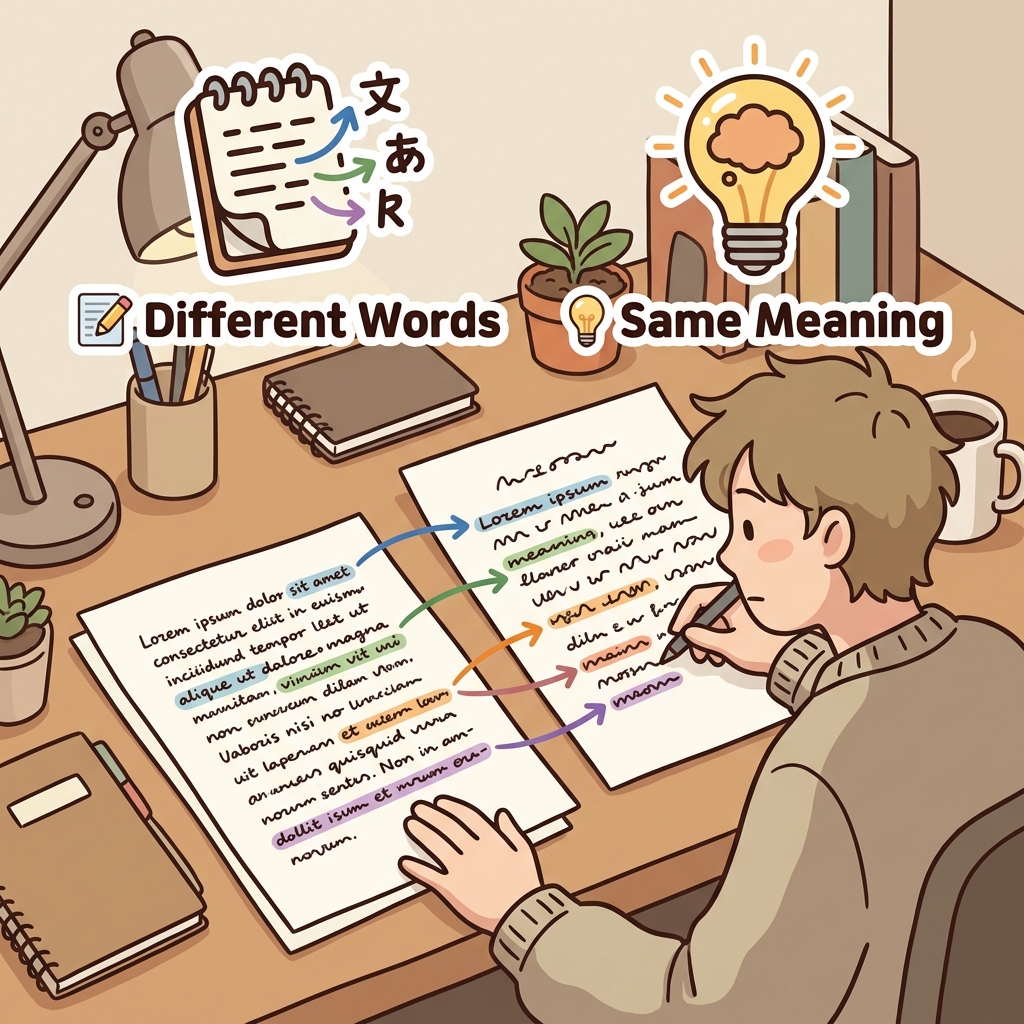
Good writers paraphrase ideas instead of copying them.

She paraphrased the speech, rephrased every idea, and amazed the audience.
Got the picture? Now let's practice.
🎤Pronunciation
🌳Etymology
Origin
From Greek para- (beside, alongside) combined with phrase (from phrasis, meaning speech or expression). The word entered English in the 16th century, originally meaning to express something in a paraphrased manner.
Breakdown
para- (beside, alongside) + phrase (speech, expression) = paraphrase
🎵Rhyme
🔗Collocations
📝Examples
“When my mom asked if I cleaned my room, I paraphrased 'organized chaos' as 'creatively arranged.'”
“The teacher asked us to paraphrase Shakespeare, but 'To be or not to be' became 'Should I exist or take a nap?'”
“Students need to learn how to paraphrase sources properly to avoid plagiarism.”
“Could you paraphrase that technical explanation in simpler terms?”
📚Related Words
Synonyms
Antonyms
Related
Want to master 19,000+ words?
Sign up free for flashcards & quizzes.