emigrate — to leave one's own country in order to settle permanently in another
Part of speech: VERB
Definition: to leave one's own country in order to settle permanently in another
Pronunciation (IPA): /ˈeməɡreɪt/
Example Sentences
- My grandfather decided to emigrate after winning the lottery, saying 'Money travels better than complaints!'
- She plans to emigrate to Canada for better job opportunities.
- The cat emigrated to the neighbor's house because they had better food.
emigrate
VERB[/ˈeməɡreɪt/]
to leave one's own country in order to settle permanently in another
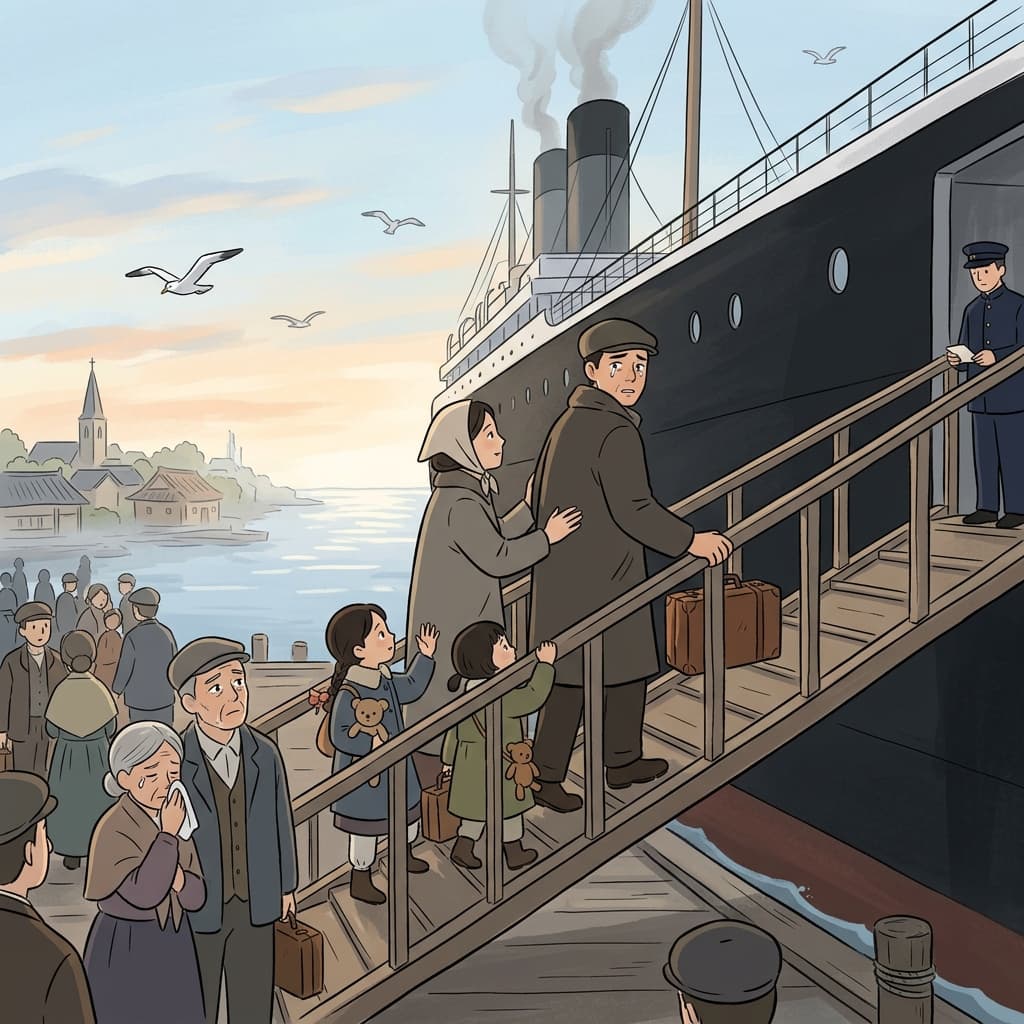
Families emigrate across the ocean, carrying suitcases toward a new homeland.

Em-migrate: M packs up and migrates to make it!

Should we emigrate and migrate, or stay home and celebrate?
Got the picture? Now let's practice.
🎤Pronunciation
🌳Etymology
Origin
From Latin 'emigrare,' meaning 'to move away or depart.' The word originally described the seasonal movement of birds and people seeking better conditions elsewhere.
Breakdown
e- (out, away) + migrate (to move from one place to another)
🎵Rhyme
🔗Collocations
📝Examples
“My grandfather decided to emigrate after winning the lottery, saying 'Money travels better than complaints!'”
“She plans to emigrate to Canada for better job opportunities.”
“The cat emigrated to the neighbor's house because they had better food.”
“Many skilled workers emigrate from developing countries to seek higher wages.”
📚Related Words
Want to master 27,000+ words?
Sign up free for flashcards & quizzes.