concede — to admit that something is true or valid after first denying or resisting it
Part of speech: VERB
Definition: to admit that something is true or valid after first denying or resisting it
Pronunciation (IPA): /kənˈsiːd/
Example Sentences
- The chess master finally conceded after staring at the board for an hour, realizing his king had nowhere to hide.
- My mom conceded that my room wasn't that messy after seeing my brother's disaster zone.
- The politician had to concede that his promise to make everyone rich was perhaps unrealistic.
concede
VERB[/kənˈsiːd/]
to admit that something is true or valid after first denying or resisting it

After three sets, he had to concede the match with a handshake.
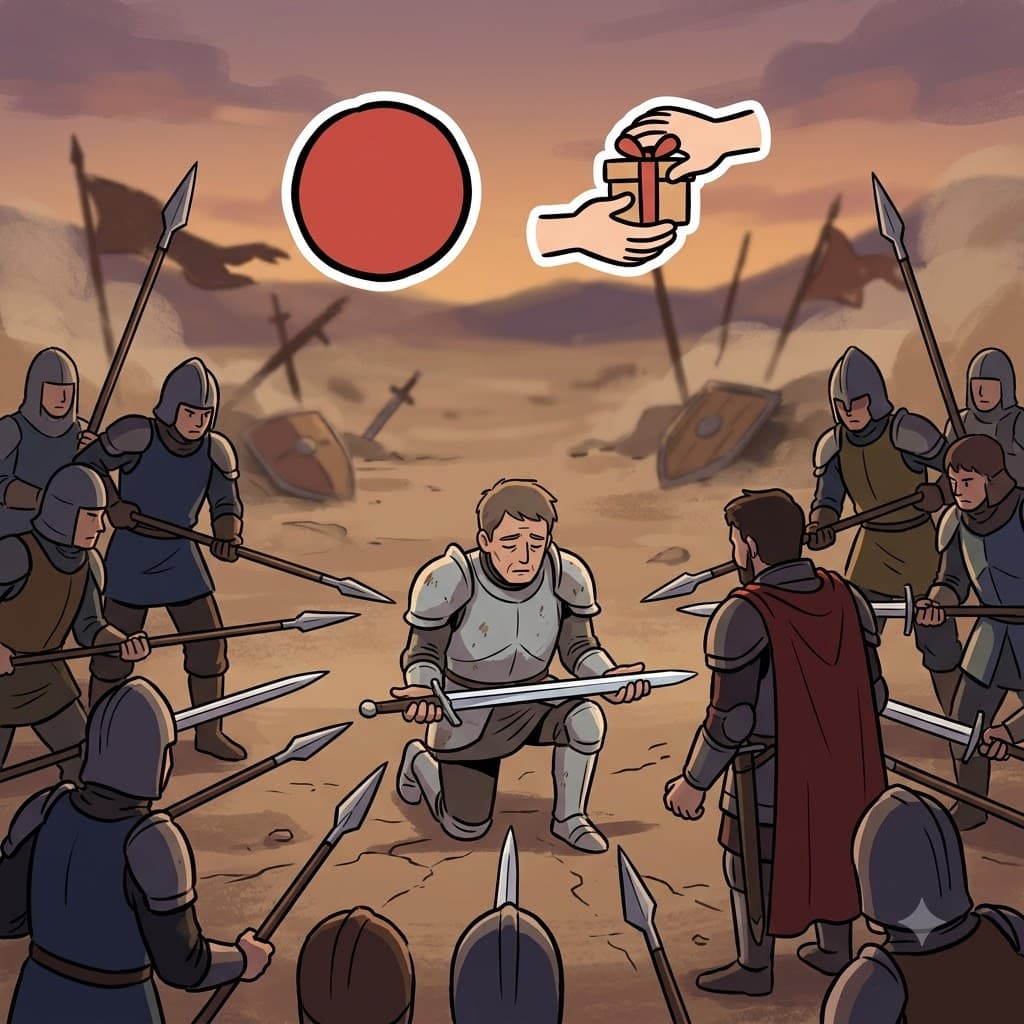
CON(completely) + CEDE(yield) — surrounded by enemy swords, the general had to CON(completely) CEDE(yield) his weapon to concede defeat.

To allow the blocked cars to safely proceed, the stubborn driver finally backed up his car to concede the narrow road.
Got the picture? Now let's practice.
🎤Pronunciation
🌳Etymology
Origin
From Latin 'concedere', formed by combining 'con-' (with, together) and 'cedere' (to go, yield, give way). The word originally meant 'to go together' but evolved to mean 'to yield' or 'to grant'.
Breakdown
con- (together, with) + cede (go, yield) = concede (to yield or admit)
🎵Rhyme
🔗Collocations
📝Examples
“The chess master finally conceded after staring at the board for an hour, realizing his king had nowhere to hide.”
“My mom conceded that my room wasn't that messy after seeing my brother's disaster zone.”
“The politician had to concede that his promise to make everyone rich was perhaps unrealistic.”
“After three hours of arguing, she conceded that pineapple on pizza might not be a crime against humanity.”
📚Related Words
Want to master 27,000+ words?
Sign up free for flashcards & quizzes.