heavy traffic — A situation where there are many vehicles on the road causing slow movement or congestion
Part of speech: NOUN
Definition: A situation where there are many vehicles on the road causing slow movement or congestion
Pronunciation (IPA): /ˈhevi ˈtræfɪk/
Example Sentences
- I left home an hour early because of heavy traffic, but still arrived fashionably late to my own birthday party.
- Heavy traffic during rush hour can turn a 20-minute commute into a 2-hour meditation session.
- The city council is implementing new measures to reduce heavy traffic in the downtown area.
heavy traffic
NOUN[/ˈhevi ˈtræfɪk/]
A situation where there are many vehicles on the road causing slow movement or congestion
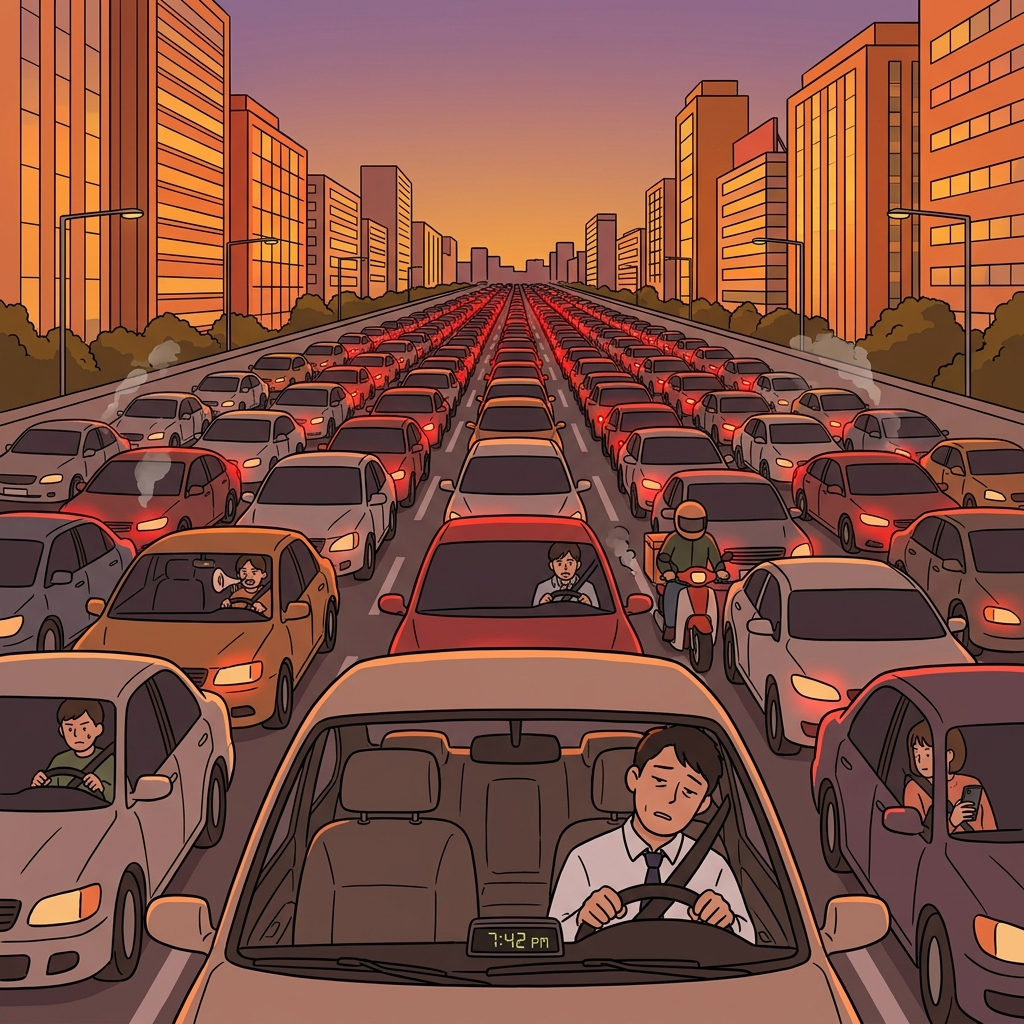
Stuck in heavy traffic, he stares at endless brake lights on the highway.
Got the picture? Now let's practice.
🎤Pronunciation
🌳Etymology
Origin
Heavy derives from Old English 'hefig', meaning 'weighty' or 'burdensome'. Traffic originates from 16th-century French 'trafique', originally denoting commerce and trade, which later evolved to mean 'movement' or 'passage of vehicles and people'.
Breakdown
heavy (Old English hefig, 'weighty') + traffic (French trafique, 'trade/passage') = a large volume or density of moving vehicles and people on roads or transportation routes.
🎵Rhyme
🔗Collocations
📝Examples
“I left home an hour early because of heavy traffic, but still arrived fashionably late to my own birthday party.”
“Heavy traffic during rush hour can turn a 20-minute commute into a 2-hour meditation session.”
“The city council is implementing new measures to reduce heavy traffic in the downtown area.”
“Due to heavy traffic on Main Street, the delivery truck took an alternative route through the residential area.”
📚Related Words
Synonyms
Antonyms
Related
Want to master 19,000+ words?
Sign up free for flashcards & quizzes.