molt — to shed old feathers, hair, or skin to make way for new growth
Part of speech: VERB
Definition: to shed old feathers, hair, or skin to make way for new growth
Pronunciation (IPA): /moʊlt/
Example Sentences
- My cat molts so much that I could knit a sweater from the fur tumbleweeds.
- The lobster molted its shell to accommodate its growing body.
- During molting season, the zoo looks like a pillow fight battlefield.
molt
VERB[/moʊlt/]
to shed old feathers, hair, or skin to make way for new growth
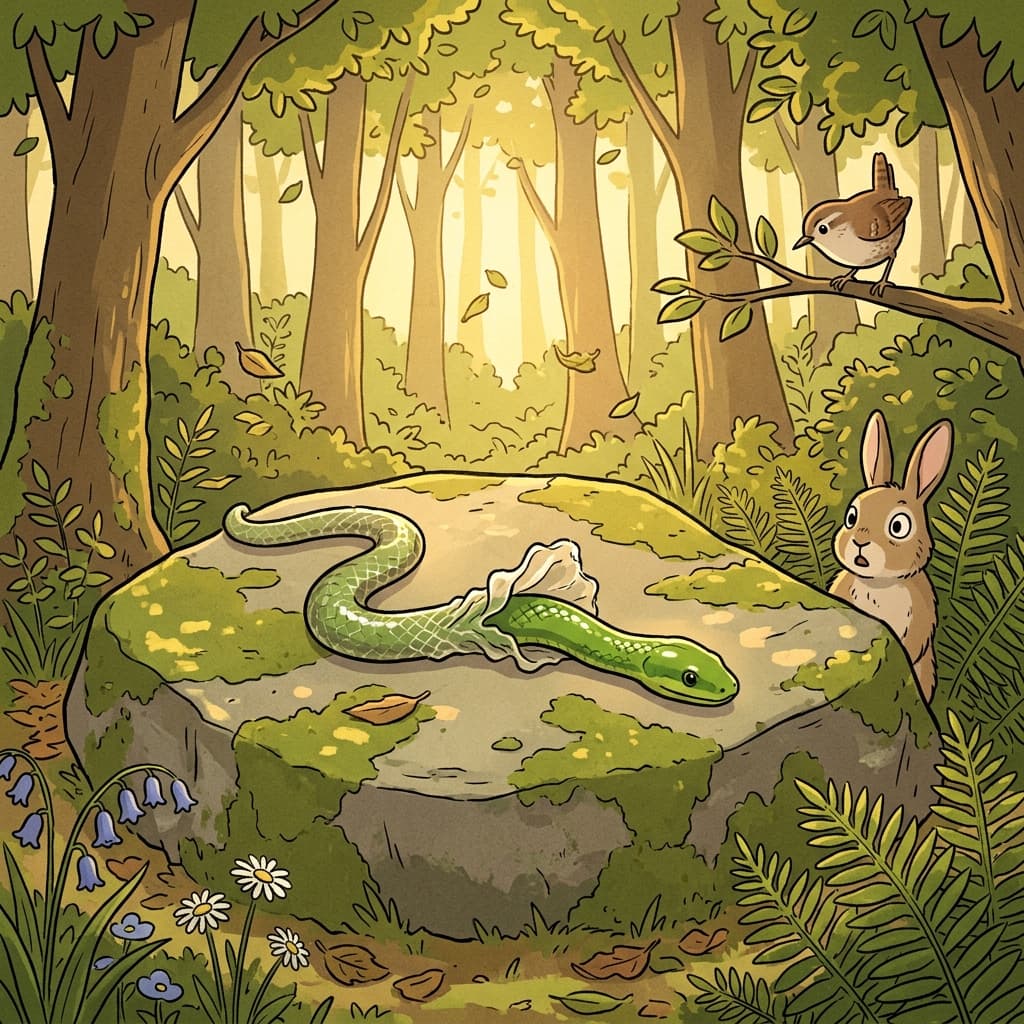
The snake begins to molt, sliding out of its old skin on a sunny rock.

Lightning bolt helps the molt with a sudden jolt!
Got the picture? Now let's practice.
🎤Pronunciation
🌳Etymology
Origin
From Old English 'moult', derived from Latin 'mutare' meaning 'to change' or 'to exchange'. The word entered English through Germanic language influence and referred to the natural process of shedding and replacing outer coverings.
Breakdown
molt: From mutare (Latin: to change, exchange) → Old English moult → Modern English molt (the process of shedding and replacing feathers, hair, or skin)
🎵Rhyme
🔗Collocations
📝Examples
“My cat molts so much that I could knit a sweater from the fur tumbleweeds.”
“The lobster molted its shell to accommodate its growing body.”
“During molting season, the zoo looks like a pillow fight battlefield.”
“Researchers study the molting patterns of arctic foxes.”
📚Related Words
Want to master 27,000+ words?
Sign up free for flashcards & quizzes.