condemnation — the expression of very strong disapproval; censure
Part of speech: NOUN
Definition: the expression of very strong disapproval; censure
Pronunciation (IPA): /ˌkɑːn.demˈneɪ.ʃən/
Example Sentences
- The chef's condemnation of pineapple pizza started a heated debate in the restaurant.
- His social media post received swift condemnation from followers who took his joke too seriously.
- The UN issued a formal condemnation of the country's human rights violations.
condemnation
NOUN[/ˌkɑːn.demˈneɪ.ʃən/]
the expression of very strong disapproval; censure
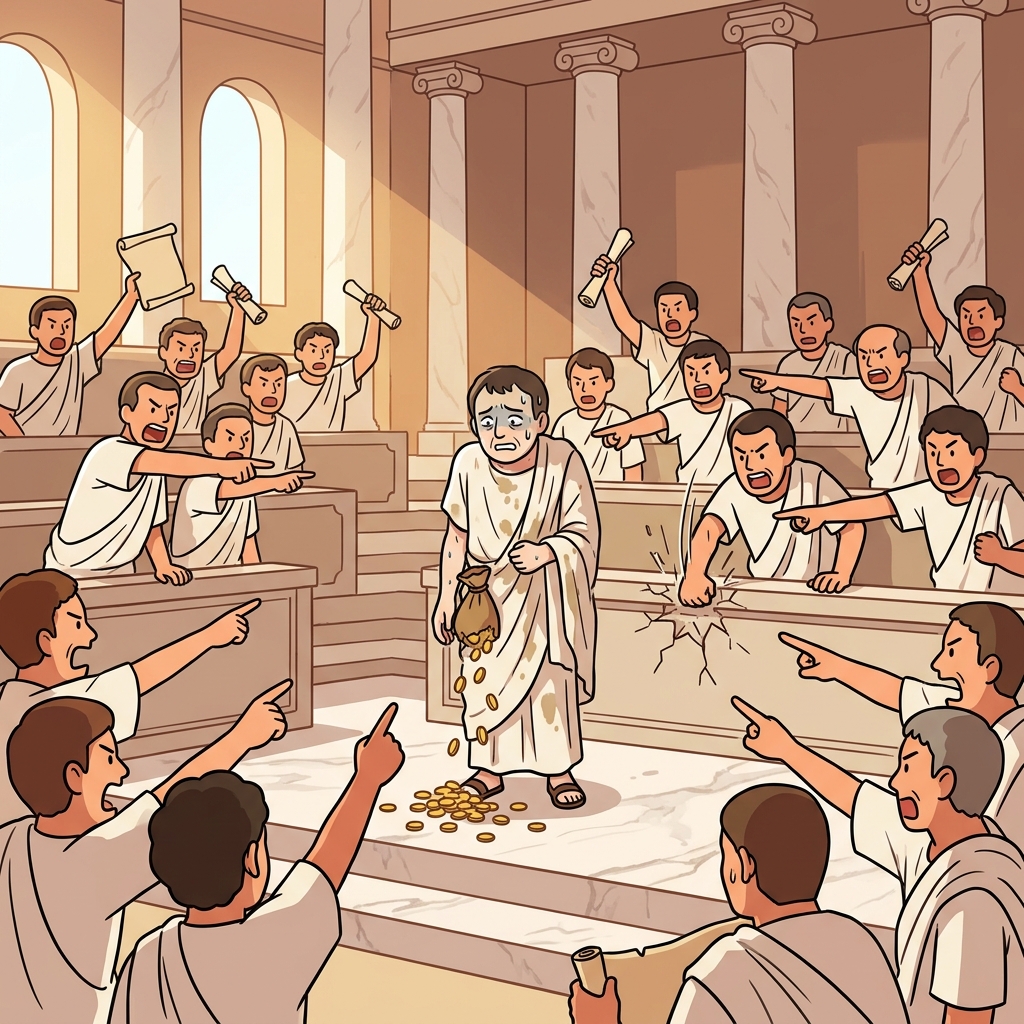
The senate erupts in fierce condemnation as the corrupt official is exposed before everyone.

The nation's condemnation echoes through the station!
Got the picture? Now let's practice.
🎤Pronunciation
🌳Etymology
Origin
The word derives from Latin 'condemnare', a compound of 'con-' (completely) and 'damnare' (to harm, to condemn). Originally meaning 'to condemn completely' or 'to punish thoroughly', it evolved to denote the act of expressing strong disapproval or censure.
Breakdown
con- (completely, entirely) + damnare (to harm, punish) + -ation (noun-forming suffix indicating an action or state). The suffix '-ation' transforms the Latin verb into an English noun denoting the act or result of condemning.
🎵Rhyme
🔗Collocations
📝Examples
“The chef's condemnation of pineapple pizza started a heated debate in the restaurant.”
“His social media post received swift condemnation from followers who took his joke too seriously.”
“The UN issued a formal condemnation of the country's human rights violations.”
“Environmental groups voiced their condemnation of the new industrial project.”
📚Related Words
Synonyms
Antonyms
Related
Want to master 19,000+ words?
Sign up free for flashcards & quizzes.