afloat — floating on water; not sinking
Part of speech: ADJECTIVE
Definition: floating on water; not sinking
Pronunciation (IPA): /əˈfloʊt/
Example Sentences
- My pizza delivery business is barely staying afloat because I keep eating the profits!
- The boat remained afloat despite the storm.
- She used her savings to keep the restaurant afloat during tough times.
afloat
ADJECTIVE[/əˈfloʊt/]
floating on water; not sinking

While the heavy iron anchor sank straight to the sandy bottom, the bright orange life vest kept the swimmer safely afloat on the waves.

A (in a state of) + FLOAT (staying on top of water) — remaining in A (a state of) steady FLOAT (buoyancy) on the lake, the wooden raft stayed afloat despite the heavy cargo.
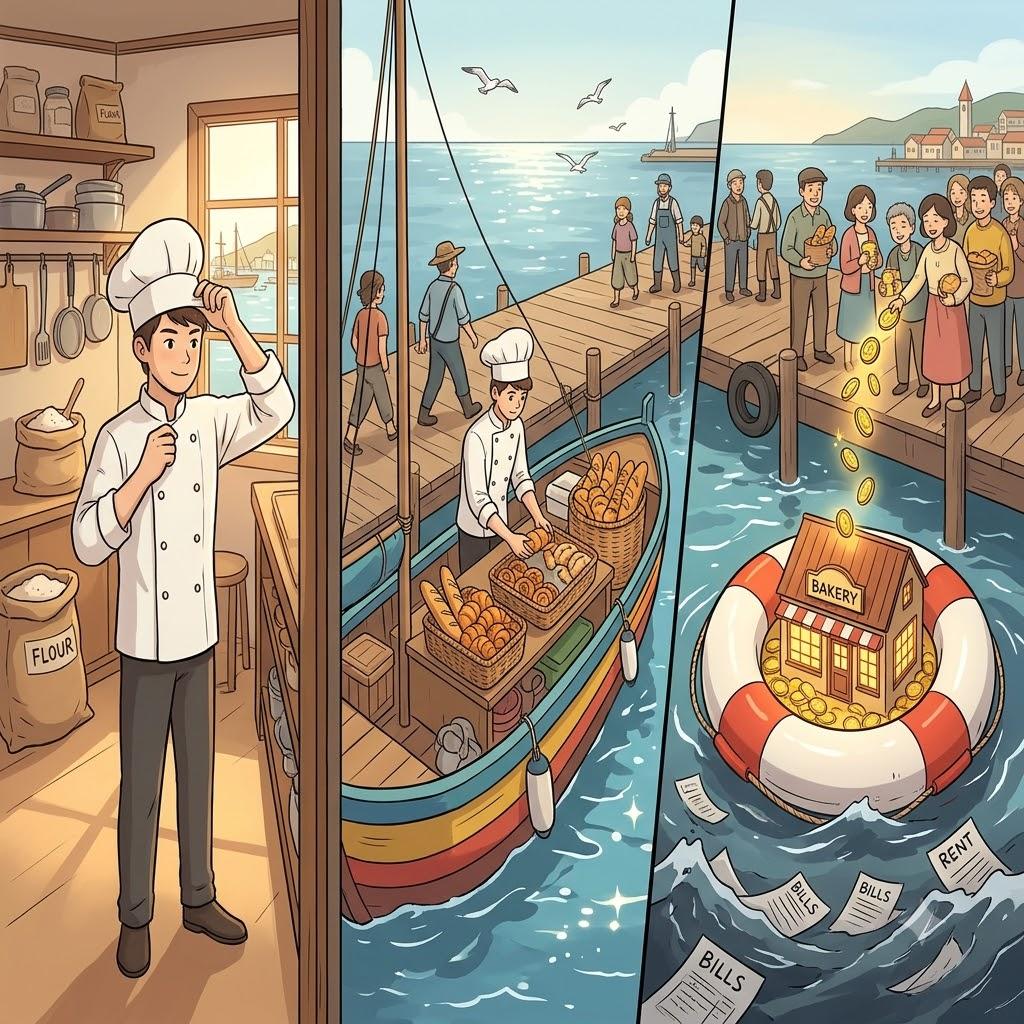
Putting on his chef's coat to sell bread from a harbor boat, the baker worked day and night to keep his family shop afloat.
Got the picture? Now let's practice.
🎤Pronunciation
🌳Etymology
Origin
The word derives from Old English 'on flote', literally meaning 'in a floating state'. The prefix 'a-' (meaning 'on' or 'in') was combined with 'float', an ancient word describing the action of remaining buoyant on water, to express the condition of being afloat.
Breakdown
a- (on, in) + float (to remain buoyant on water, from Old English 'flotan'). The 'a-' prefix transforms the verb into an adjectival or adverbial state.
🎵Rhyme
🔗Collocations
📝Examples
“My pizza delivery business is barely staying afloat because I keep eating the profits!”
“The boat remained afloat despite the storm.”
“She used her savings to keep the restaurant afloat during tough times.”
“The cork kept the fishing net afloat on the surface.”
📚Related Words
Want to master 17,000+ words?
Sign up free for flashcards & quizzes.