take off — (of an aircraft) to leave the ground and begin flying
Part of speech: VERB
Definition: (of an aircraft) to leave the ground and begin flying
Pronunciation (IPA): /teɪk ɔːf/
Example Sentences
- My cat always tries to take off my socks while I'm sleeping.
- The rocket is scheduled to take off at dawn.
- After one viral video, his YouTube channel just took off.
take off
VERB[/teɪk ɔːf/]
(of an aircraft) to leave the ground and begin flying
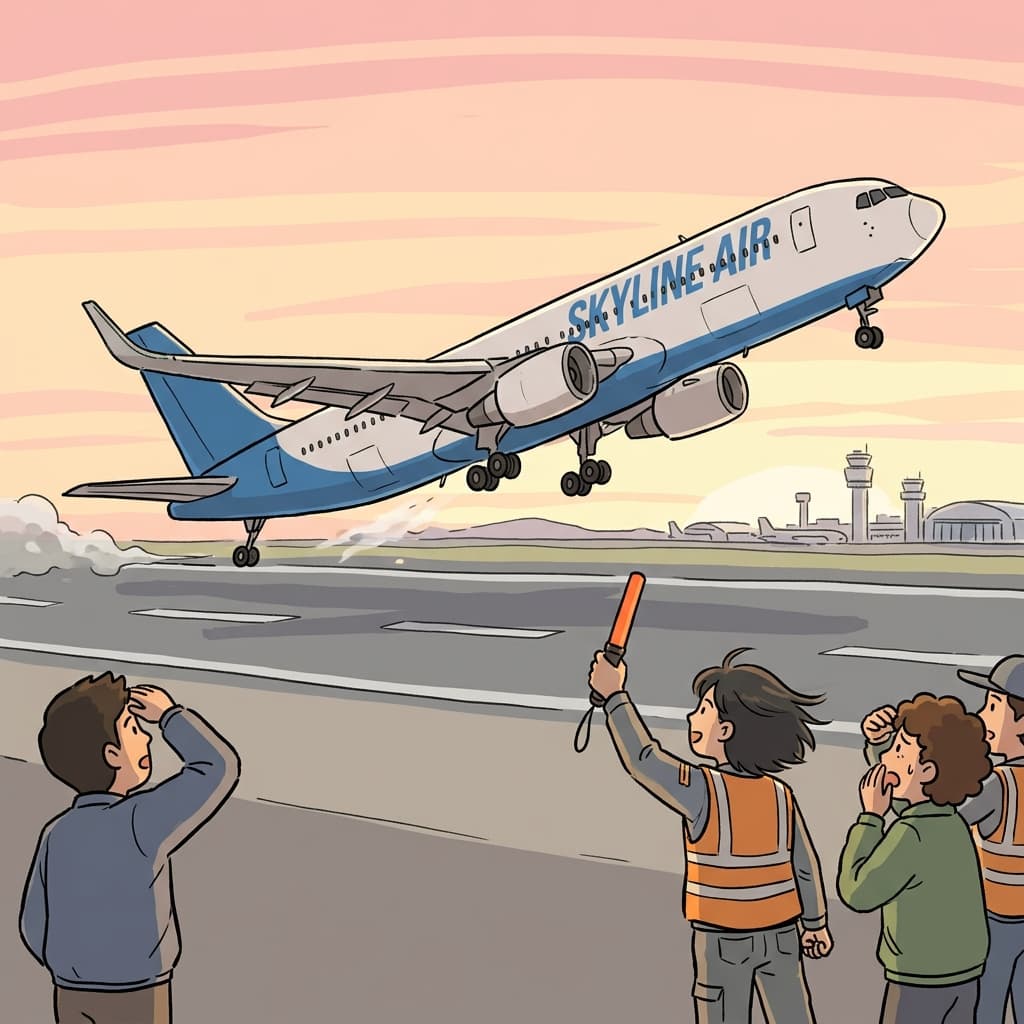
The plane begins to take off, lifting smoothly into the morning sky.
Got the picture? Now let's practice.
🎤Pronunciation
🌳Etymology
Origin
Take off originated from the combination of Old English 'take' (to grasp or seize) and 'off' (away or separated). Initially used in the late 18th century to mean removing clothing from the body, the phrase evolved in the early 20th century with aviation development to mean 'to leave the ground and become airborne,' and later extended figuratively to mean 'to achieve sudden success or popularity.'
Breakdown
take (Old English 'takan'—to grasp, seize) + off (Old English 'of'—away, separated). The phrasal verb combines these two elements to express removal or departure in both literal and figurative contexts.
🎵Rhyme
🔗Collocations
📝Examples
“My cat always tries to take off my socks while I'm sleeping.”
“The rocket is scheduled to take off at dawn.”
“After one viral video, his YouTube channel just took off.”
“She took off her sunglasses so dramatically, you'd think she was in a movie.”
“I need to take a few days off after this crazy week.”
📚Related Words
Want to master 27,000+ words?
Sign up free for flashcards & quizzes.