disruptive — causing or tending to cause disruption; innovative in a way that challenges traditional methods
Part of speech: ADJECTIVE
Definition: causing or tending to cause disruption; innovative in a way that challenges traditional methods
Pronunciation (IPA): /dɪsˈrʌptɪv/
Example Sentences
- Tom's disruptive snoring turned the quiet library into a comedy show.
- Smartphones were disruptive to the traditional camera industry.
- The teacher asked the disruptive student to stop making paper airplanes during math class.
disruptive
ADJECTIVE[/dɪsˈrʌptɪv/]
causing or tending to cause disruption; innovative in a way that challenges traditional methods
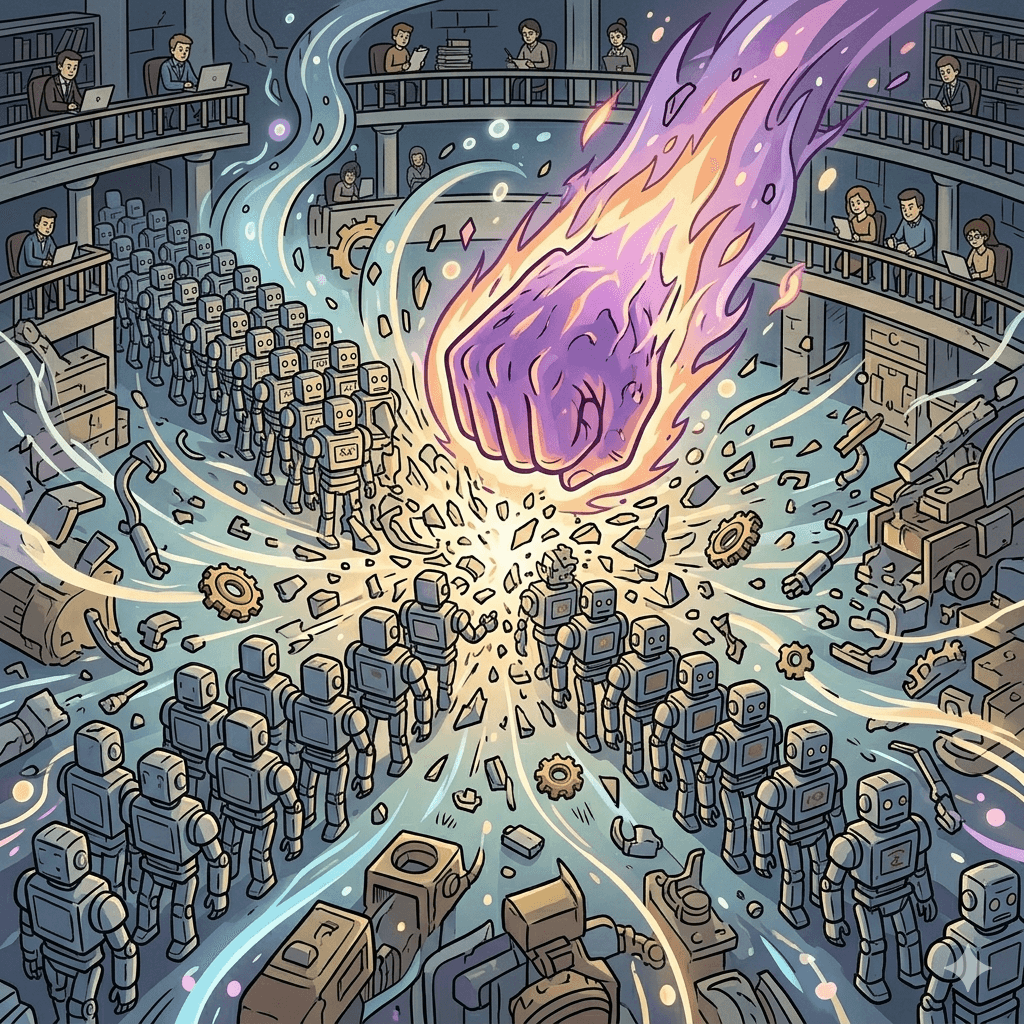
causing or tending to cause disruption; innovative in a way that challenges traditional methods

Her disruptive vision proves more eruptive than corruptive!
Got the picture? Now let's practice.
🎤Pronunciation
🌳Etymology
Origin
Derived from Latin 'disrumpere' (to break apart, shatter into pieces), the word evolved to describe something that breaks or destroys existing order or continuity. The term entered English through the adjective form, gaining the extended sense of causing significant disturbance or interruption to established systems.
Breakdown
dis- (apart, away) + rumpere (to break, burst) + -ive (adjective-forming suffix indicating a quality or tendency). The root 'rumpere' is also found in 'rupture' and 'corrupt'.
🎵Rhyme
🔗Collocations
📝Examples
“Tom's disruptive snoring turned the quiet library into a comedy show.”
“Smartphones were disruptive to the traditional camera industry.”
“The teacher asked the disruptive student to stop making paper airplanes during math class.”
“Electric cars are proving to be disruptive to the oil industry.”
📚Related Words
Want to master 27,000+ words?
Sign up free for flashcards & quizzes.