mother tongue — the first language that a person learns as a child, usually spoken at home
Part of speech: NOUN
Definition: the first language that a person learns as a child, usually spoken at home
Pronunciation (IPA): /ˈmʌðər tʌŋ/
Example Sentences
- Even after living in the US for 20 years, he still counts numbers in his mother tongue when he's nervous.
- Public officials should be able to communicate policies clearly in citizens' mother tongue.
- My grandmother's mother tongue was a regional dialect that almost no young people speak anymore.
mother tongue
NOUN[/ˈmʌðər tʌŋ/]
the first language that a person learns as a child, usually spoken at home
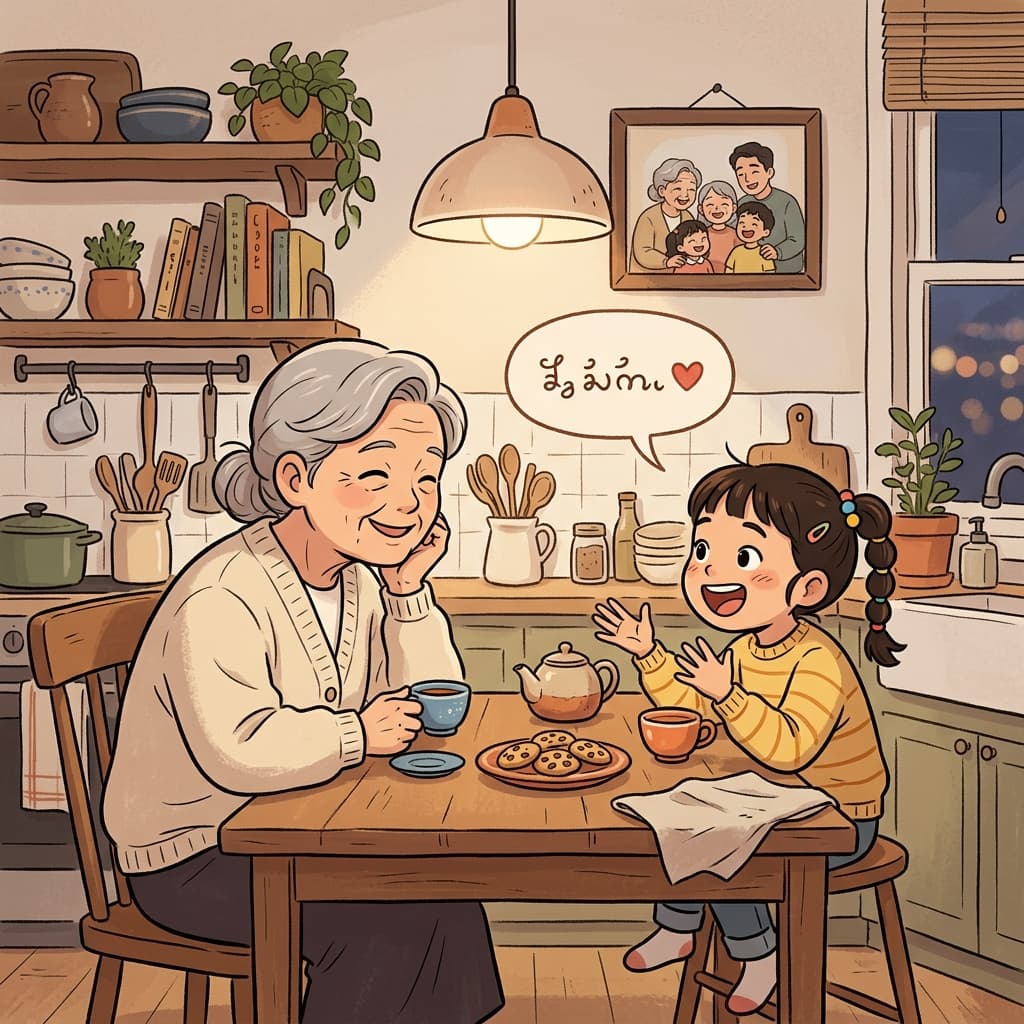
The little girl speaks her mother tongue with grandma at the kitchen table.
Got the picture? Now let's practice.
🎤Pronunciation
🌳Etymology
Origin
This expression derives from Medieval Latin 'lingua materna' (mother's language). Historically, fathers taught Latin—the official language—in formal schooling, while mothers naturally taught children their first words at home. This gave rise to the phrase 'mother's tongue,' which came to denote the native language acquired naturally within the family.
Breakdown
mother (Latin mater, feminine parent) + tongue (from Old English tunge, meaning both the physical organ and by extension, language or speech).
🎵Rhyme
🔗Collocations
📝Examples
“Even after living in the US for 20 years, he still counts numbers in his mother tongue when he's nervous.”
“Public officials should be able to communicate policies clearly in citizens' mother tongue.”
“My grandmother's mother tongue was a regional dialect that almost no young people speak anymore.”
“He dreams in his mother tongue, but he complains in English—apparently that's more satisfying.”
📚Related Words
Want to master 27,000+ words?
Sign up free for flashcards & quizzes.