rounding — The process of adjusting a number to the nearest whole number, ten, hundred, etc., to make it simpler
Part of speech: NOUN
Definition: The process of adjusting a number to the nearest whole number, ten, hundred, etc., to make it simpler
Pronunciation (IPA): /ˈraʊndɪŋ/
Example Sentences
- My little brother always rounds up his test score from 89 to 90, saying it's basically the same thing.
- Rounding numbers can make math easier, but it can also make your grade look better than it actually is!
- The hospital rounding schedule shows the doctor visits every patient by 9 AM.
rounding
NOUN[/ˈraʊndɪŋ/]
The process of adjusting a number to the nearest whole number, ten, hundred, etc., to make it simpler
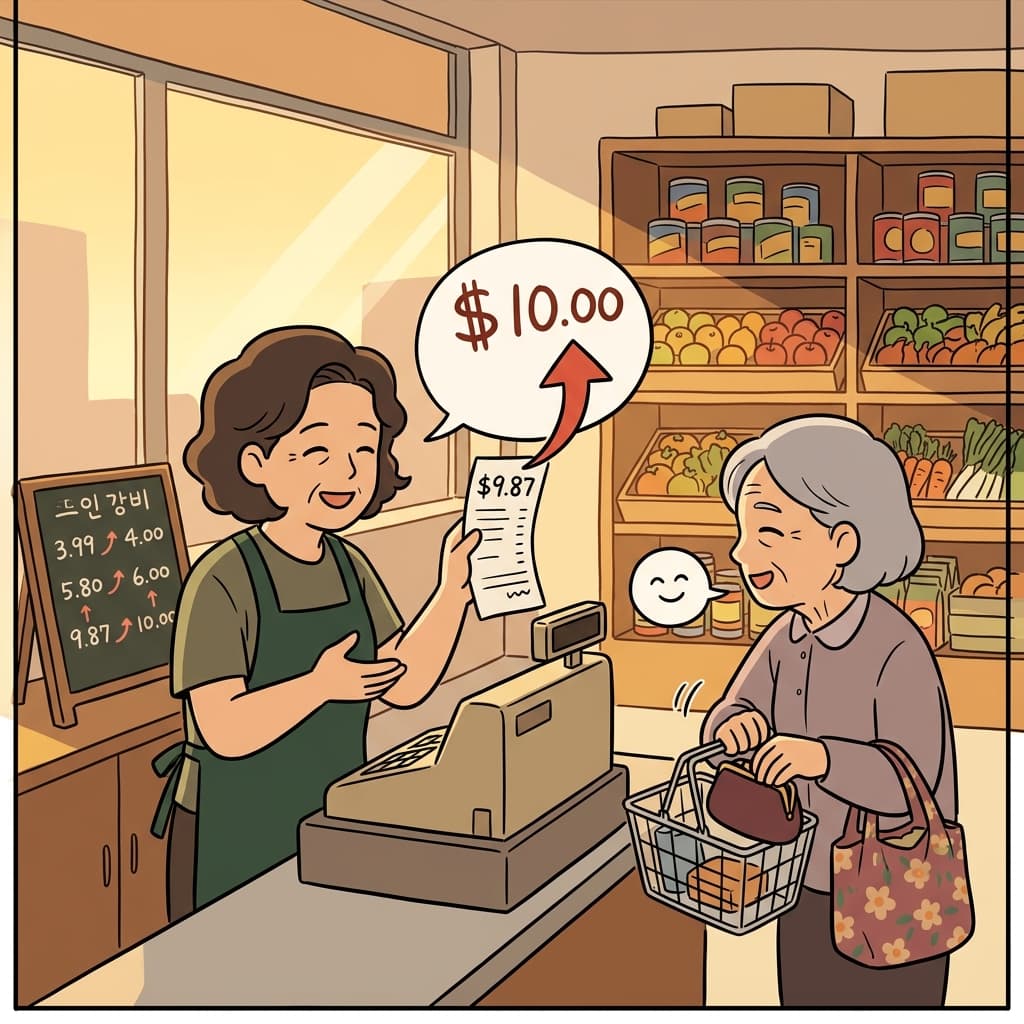
The cashier is rounding the total up to the nearest dollar for simplicity.
Got the picture? Now let's practice.
🎤Pronunciation
🌳Etymology
Origin
Rounding derives from the verb 'round', which originates from Old French 'roont', itself from Latin 'rotundus' meaning 'round' or 'circular'. The mathematical sense developed metaphorically from the physical concept of making something round or smooth, applied to the process of simplifying numerical values to whole numbers.
Breakdown
round (from Latin rotundus, meaning circular or spherical) + -ing (present participle suffix indicating an action or process) = the process of making a number round or reducing it to a simpler form.
🎵Rhyme
🔗Collocations
📝Examples
“My little brother always rounds up his test score from 89 to 90, saying it's basically the same thing.”
“Rounding numbers can make math easier, but it can also make your grade look better than it actually is!”
“The hospital rounding schedule shows the doctor visits every patient by 9 AM.”
“Due to rounding, the total percentage adds up to 101% instead of 100%.”
“She's so bad at rounding that she once rounded 2.4 up to 10 just to make her budget look better.”
📚Related Words
Want to master 27,000+ words?
Sign up free for flashcards & quizzes.