piracy — the practice of attacking and robbing ships at sea
Part of speech: NOUN
Definition: the practice of attacking and robbing ships at sea
Pronunciation (IPA): /ˈpaɪrəsi/
Example Sentences
- The captain's parrot kept squawking 'Download legally!' after witnessing too much digital piracy.
- Modern piracy has shifted from stealing treasure chests to stealing movies and music online.
- The irony was that the pirate movie he illegally downloaded was actually about fighting piracy.
piracy
NOUN[/ˈpaɪrəsi/]
the practice of attacking and robbing ships at sea
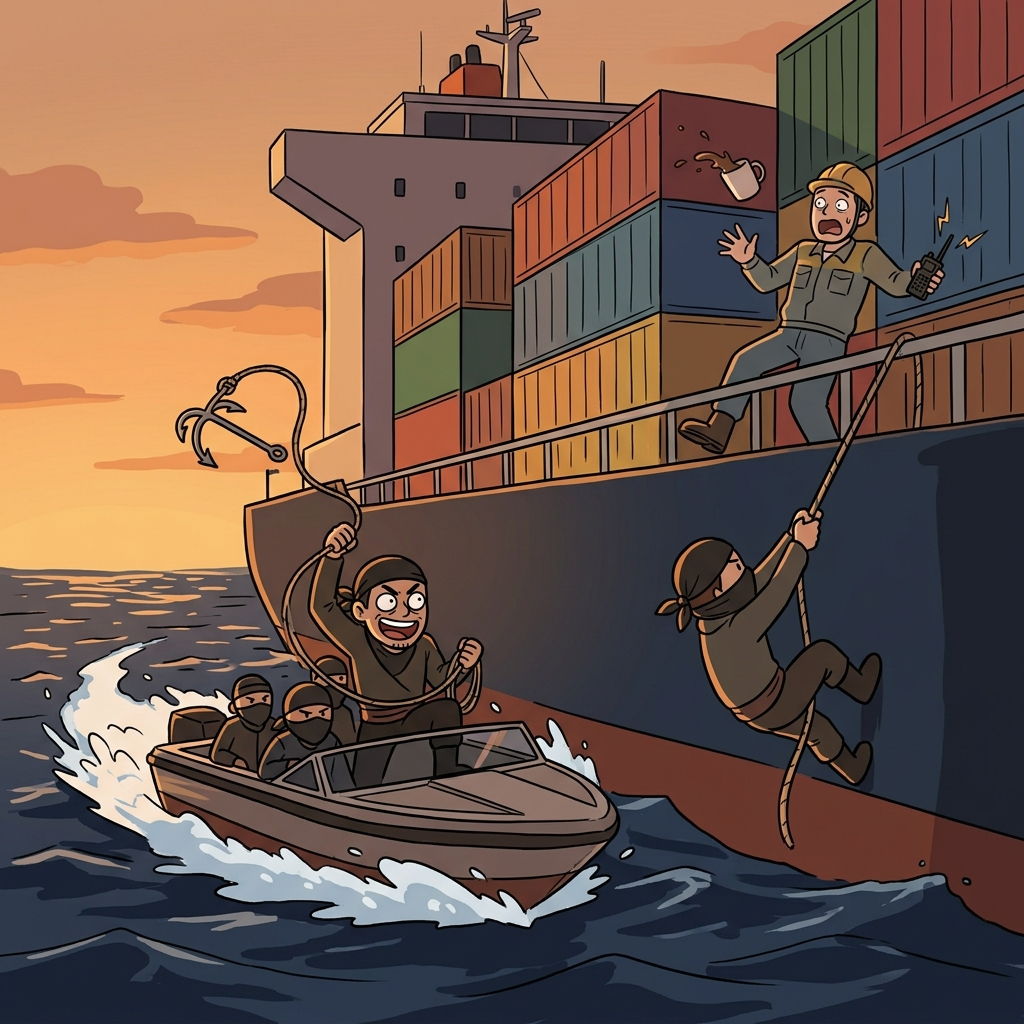
Pirates in a speedboat board a cargo ship, showing modern piracy at sea.
Got the picture? Now let's practice.
🎤Pronunciation
🌳Etymology
Origin
The word derives from Latin pirata, which itself comes from Greek peirates, originally meaning 'one who attacks or plunders.' Historically, piracy referred specifically to robbery and violence at sea, but the meaning has expanded in modern usage to encompass unauthorized reproduction and distribution of copyrighted material, including software, music, and films.
Breakdown
pirat- (from Latin pirata, meaning plunderer or sea robber) + -cy (a suffix forming nouns denoting a state, condition, or practice). The Greek root peirates derives from peirazein, meaning 'to attack or attempt.'
🎵Rhyme
🔗Collocations
📝Examples
“The captain's parrot kept squawking 'Download legally!' after witnessing too much digital piracy.”
“Modern piracy has shifted from stealing treasure chests to stealing movies and music online.”
“The irony was that the pirate movie he illegally downloaded was actually about fighting piracy.”
“International cooperation is essential to combat piracy in busy shipping lanes.”
📚Related Words
Synonyms
Antonyms
Related
Want to master 19,000+ words?
Sign up free for flashcards & quizzes.