unwillingly — in a reluctant manner; not willingly; done against one's own wishes
Part of speech: ADVERB
Definition: in a reluctant manner; not willingly; done against one's own wishes
Pronunciation (IPA): /ʌnˈwɪlɪŋli/
Example Sentences
- The cat unwillingly took a bath, meowing in protest the entire time.
- As a civil servant, he unwillingly transferred to a rural office far from his family.
- She unwillingly shared her lunch with her noisy coworker who forgot his own.
unwillingly
ADVERB[/ʌnˈwɪlɪŋli/]
in a reluctant manner; not willingly; done against one's own wishes
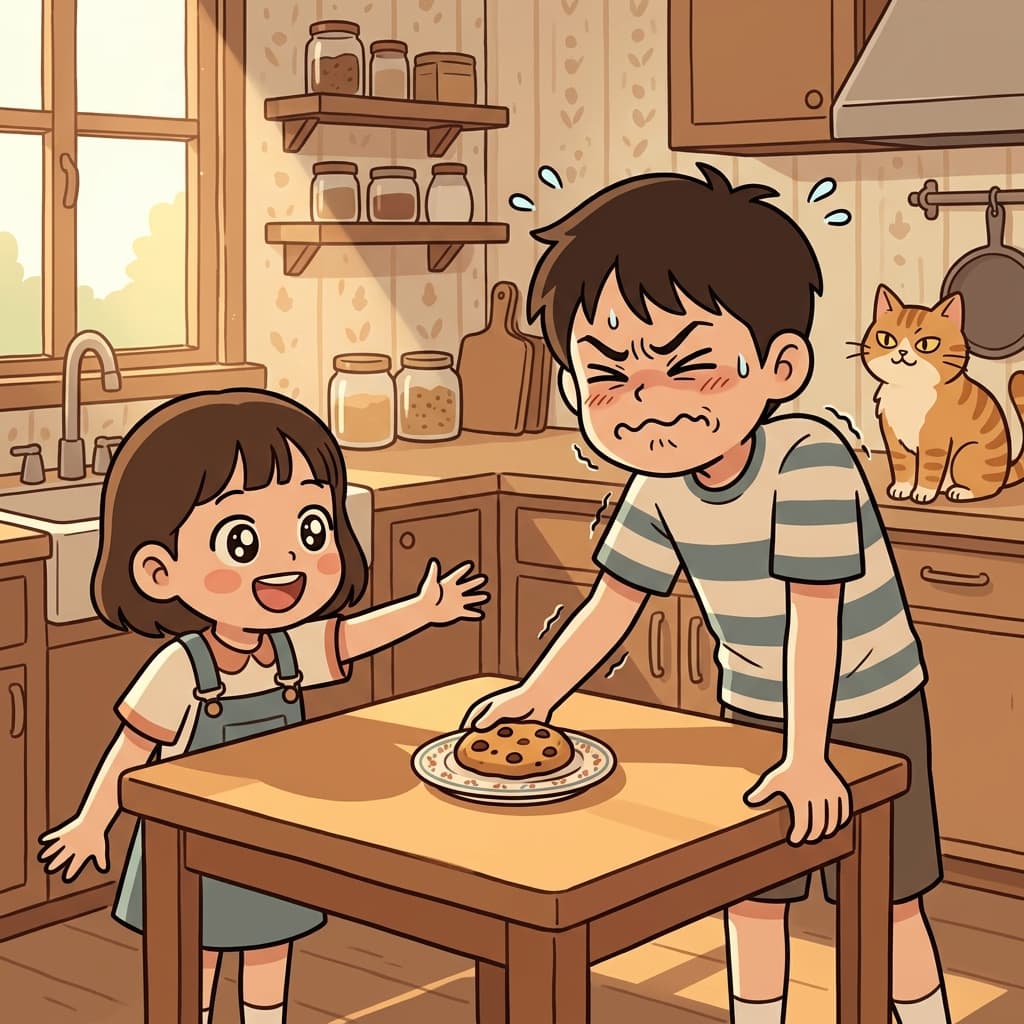
He unwillingly hands over his last cookie to his little sister.
Got the picture? Now let's practice.
🎤Pronunciation
🌳Etymology
Origin
Unwillingly combines the Old English negative prefix un- with willing, derived from Old English willa (will, desire, intention). The word evolved to express action taken without voluntary consent or desire, maintaining its etymological connection to the verb will through the root sense of intentional choice.
Breakdown
un- (not) + will (desire, intention from Old English willa) + -ing (adjective-forming suffix) + -ly (adverb-forming suffix), creating an adverb meaning 'in a manner lacking willingness or voluntary consent'.
🎵Rhyme
🔗Collocations
📝Examples
“The cat unwillingly took a bath, meowing in protest the entire time.”
“As a civil servant, he unwillingly transferred to a rural office far from his family.”
“She unwillingly shared her lunch with her noisy coworker who forgot his own.”
“The committee unwillingly approved the budget cut after hours of debate.”
📚Related Words
Want to master 27,000+ words?
Sign up free for flashcards & quizzes.