yield to — to give way to or surrender to someone or something
Part of speech: VERB
Definition: to give way to or surrender to someone or something
Pronunciation (IPA): /jiːld tuː/
Example Sentences
- The vampire finally yielded to garlic bread instead of human blood.
- She refused to yield to the bully's threats.
- The strict teacher eventually yielded to students' requests for a pizza party.
yield to
VERB[/jiːld tuː/]
to give way to or surrender to someone or something
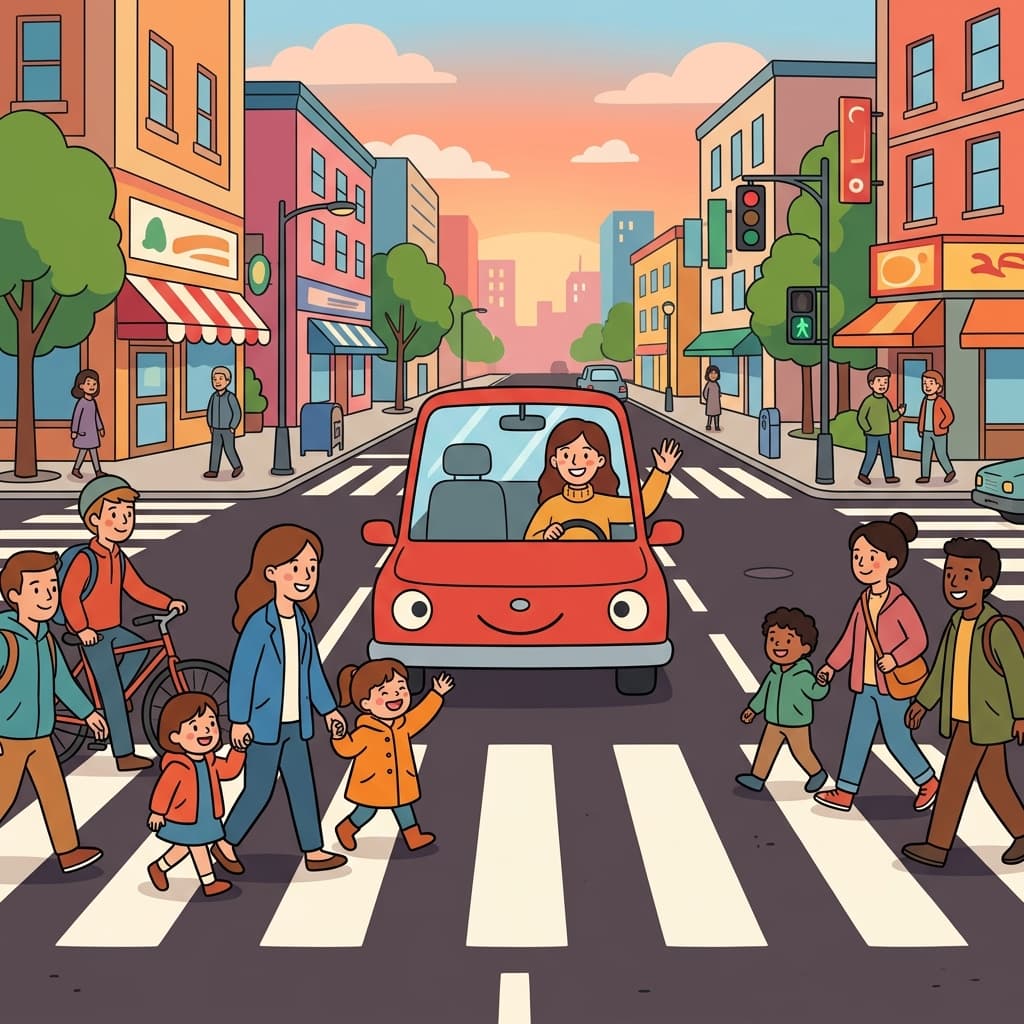
The driver yielded to the pedestrians at the crosswalk.

After a long battle, the defeated king yielded to the enemy. (KNEEL TO → If you kneel to someone, you yield to them.)

She yielded to her friend's appeal to stay and listened to his advice.
Got the picture? Now let's practice.
🎤Pronunciation
🌳Etymology
Origin
The phrase 'yield to' derives from Old English 'gieldan,' originally meaning 'to pay' or 'to compensate.' Over time, the sense evolved from a literal payment or repayment to the figurative meaning of 'to give way' or 'to concede,' reflecting a shift from financial obligation to submission or compliance.
Breakdown
Old English 'gieldan' (to pay, compensate) evolved into Middle English 'yelden' and then Modern English 'yield,' with the preposition 'to' indicating the direction of submission or concession.
🎵Rhyme
🔗Collocations
📝Examples
“The vampire finally yielded to garlic bread instead of human blood.”
“She refused to yield to the bully's threats.”
“The strict teacher eventually yielded to students' requests for a pizza party.”
“Drivers must yield to pedestrians at crosswalks.”
📚Related Words
Want to master 27,000+ words?
Sign up free for flashcards & quizzes.