bridge — a structure carrying a road, path, railway, etc. across a river, road, or other obstacle
Part of speech: NOUN
Definition: a structure carrying a road, path, railway, etc. across a river, road, or other obstacle
Pronunciation (IPA): /brɪdʒ/
Example Sentences
- My grandmother always says 'Don't burn your bridges' when I complain about my job.
- The new bridge reduced my commute time from 2 hours to 30 minutes.
- She tried to bridge the awkward silence by telling a joke, but it made things worse.
bridge
NOUN[/brɪdʒ/]
a structure carrying a road, path, railway, etc. across a river, road, or other obstacle
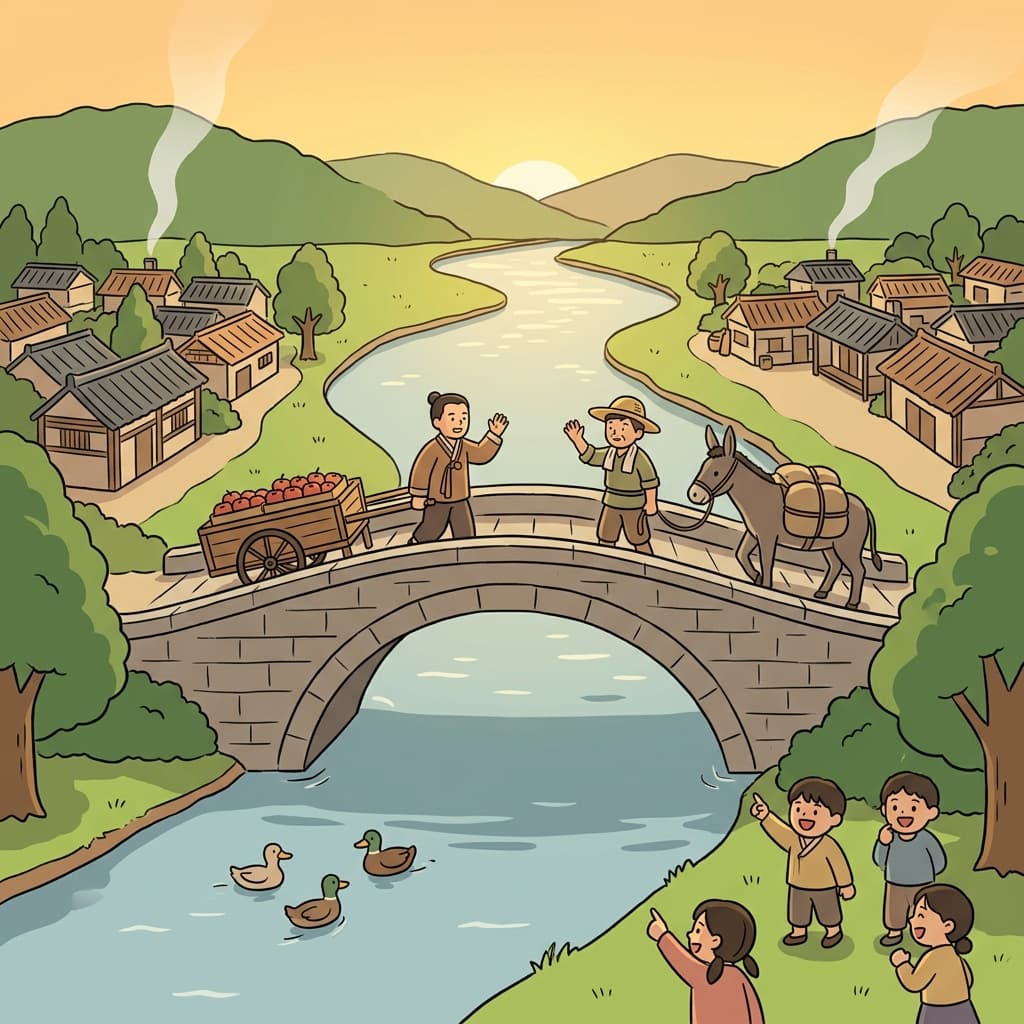
A stone bridge connects two villages across a wide river at sunset.
Got the picture? Now let's practice.
🎤Pronunciation
🌳Etymology
Origin
Bridge derives from Old English 'brycg', which originated from a common Germanic root. The word originally referred to a wooden path or structure built to span across water or obstacles.
Breakdown
Old English 'brycg' (bridge) evolved from Proto-Germanic roots related to the concept of a constructed passage or beam structure, ultimately tracing to Indo-European origins meaning 'to break' or 'to span'.
🎵Rhyme
🔗Collocations
📝Examples
“My grandmother always says 'Don't burn your bridges' when I complain about my job.”
“The new bridge reduced my commute time from 2 hours to 30 minutes.”
“She tried to bridge the awkward silence by telling a joke, but it made things worse.”
“The Golden Gate Bridge is one of the most photographed bridges in the world.”
📚Related Words
Want to master 27,000+ words?
Sign up free for flashcards & quizzes.