probability — the extent to which an event is likely to occur, measured by the ratio of the favorable cases to the whole number of cases possible
Part of speech: NOUN
Definition: the extent to which an event is likely to occur, measured by the ratio of the favorable cases to the whole number of cases possible
Pronunciation (IPA): /ˌprɑːbəˈbɪləti/
Example Sentences
- The probability of finding a parking spot in Seoul during rush hour is practically zero.
- Weather forecasters use probability models to predict storms.
- The probability of my cat actually listening to me is about 0.001%.
probability
NOUN[/ˌprɑːbəˈbɪləti/]
the extent to which an event is likely to occur, measured by the ratio of the favorable cases to the whole number of cases possible
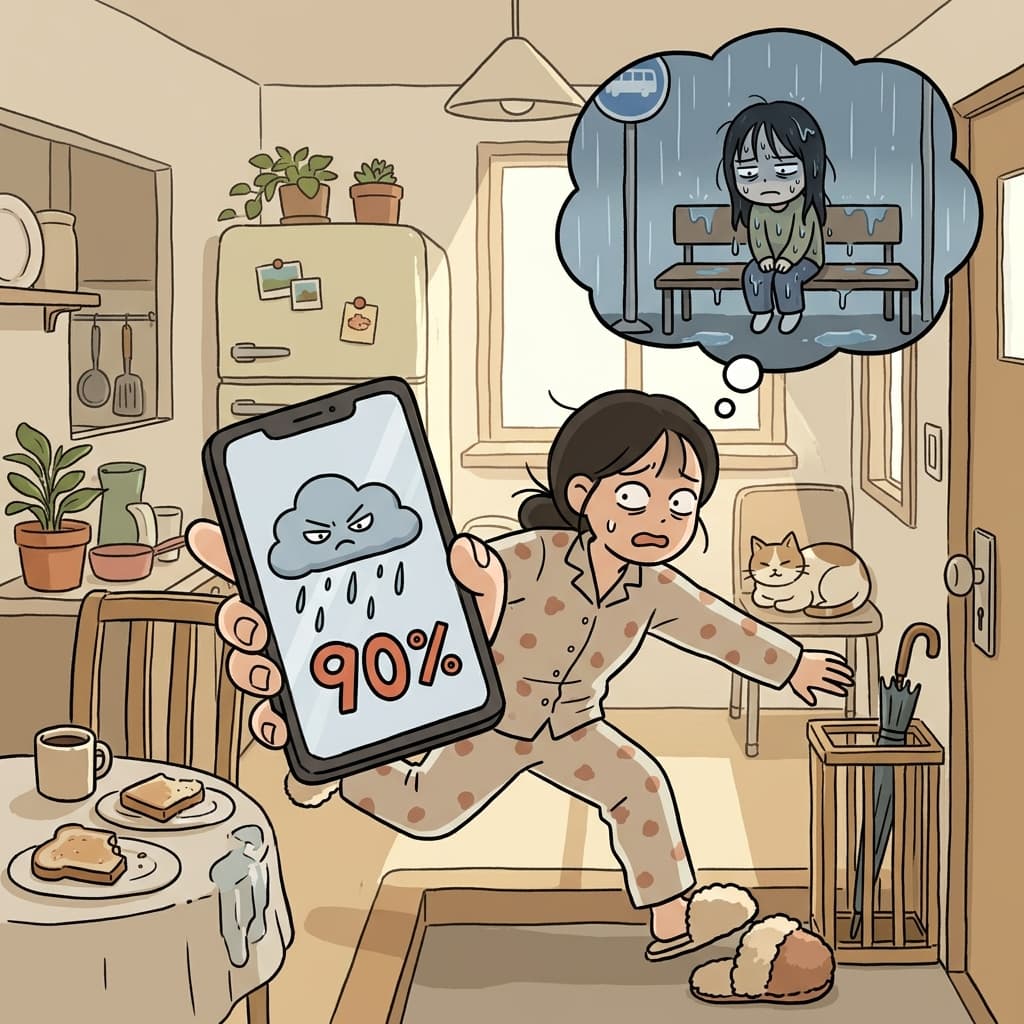
The weather app shows a 90% probability of rain this afternoon.
Got the picture? Now let's practice.
🎤Pronunciation
🌳Etymology
Origin
Probability derives from Latin probabilis, meaning 'able to be proved' or 'worthy of belief.' The word entered English in the 16th century, initially denoting the quality of being provable or credible. Its meaning evolved with the development of mathematics and statistics to denote the numerical measure of likelihood.
Breakdown
probabilis (able to be proved, credible) + -ity (state or quality). The Latin root probabilis itself combines pro- (forward) + habilis (apt, suitable), originally meaning 'worthy of assent or approval.'
🎵Rhyme
🔗Collocations
📝Examples
“The probability of finding a parking spot in Seoul during rush hour is practically zero.”
“Weather forecasters use probability models to predict storms.”
“The probability of my cat actually listening to me is about 0.001%.”
“Insurance companies base their premiums on probability calculations.”
📚Related Words
Want to master 27,000+ words?
Sign up free for flashcards & quizzes.