cope — to deal successfully with a difficult situation
Part of speech: VERB
Definition: to deal successfully with a difficult situation
Pronunciation (IPA): /koʊp/
Example Sentences
- My grandmother can cope with technology better than most teenagers.
- I can barely cope with Monday mornings, let alone Monday meetings.
- Students need to learn how to cope with exam pressure.
cope
VERB[/koʊp/]
to deal successfully with a difficult situation

To cope with the impossible workload, the desperate employee aggressively slammed a giant riot shield into the ground to block the massive tsunami of flying papers.

COP(police) + E(energy) — to cope with a crisis is when a cop uses explosive physical energy to manually lift a falling bridge.
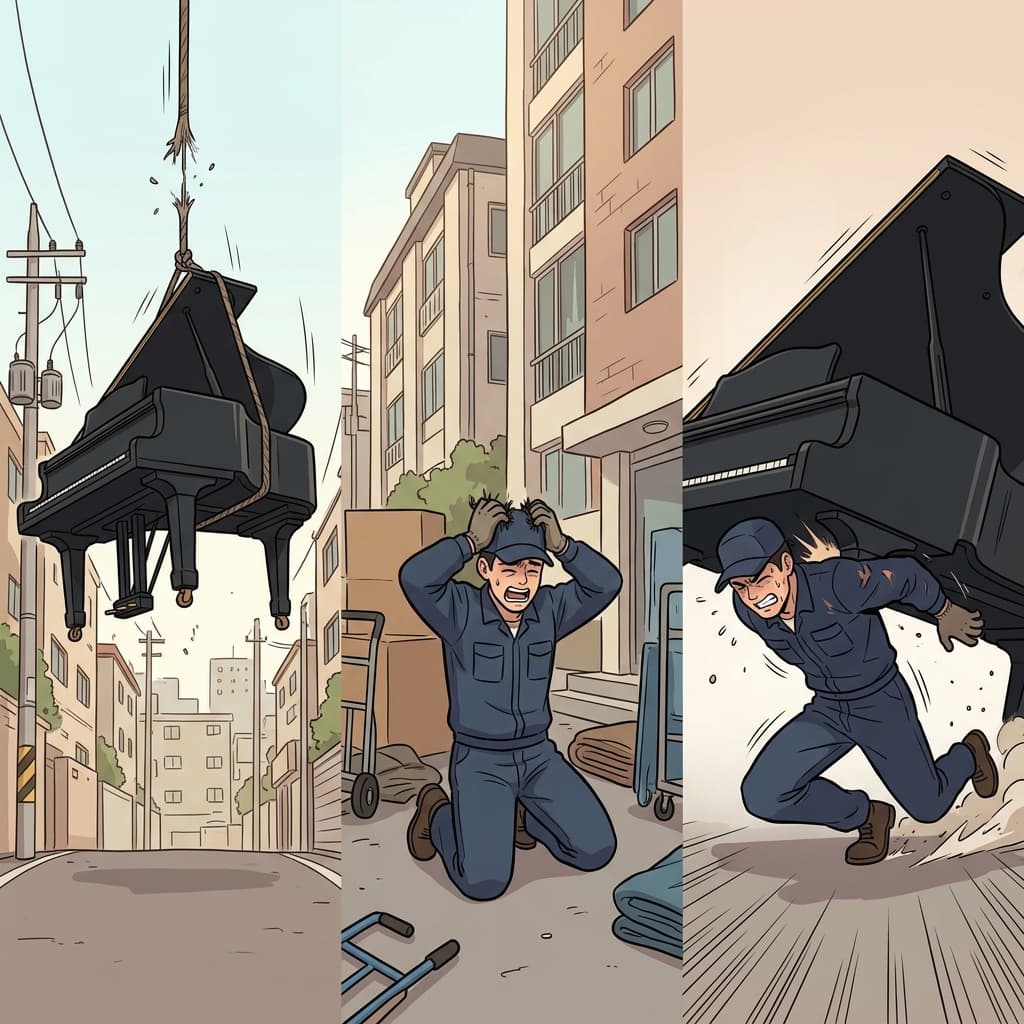
Watching the snapping rope, the mover lost all hope, but then aggressively threw his own body under the heavy piano to physically cope with the disaster.
Got the picture? Now let's practice.
🎤Pronunciation
🌳Etymology
Origin
The word 'cope' derives from 14th-century French 'couper', meaning 'to cut' or 'to strike'. Originally used to denote 'to fight against' or 'to contend with', the term gradually evolved to its modern sense of 'to deal with or manage a difficult situation'.
Breakdown
couper (French: to cut, strike) → cope (to contend with, manage difficulty). The semantic shift reflects a metaphorical extension from physical striking to mental/emotional confrontation with adversity.
🎵Rhyme
🔗Collocations
📝Examples
“My grandmother can cope with technology better than most teenagers.”
“I can barely cope with Monday mornings, let alone Monday meetings.”
“Students need to learn how to cope with exam pressure.”
“She couldn't cope with the workload and decided to quit.”
📚Related Words
Want to master 27,000+ words?
Sign up free for flashcards & quizzes.