leave — to go away from a place or person
Part of speech: VERB
Definition: to go away from a place or person
Pronunciation (IPA): /liːv/
Example Sentences
- My cat always leaves dead mice at my door like expensive gifts.
- Don't leave your homework until the last minute.
- He left his wallet at home and had to eat instant noodles for lunch.
leave
VERB[/liːv/]
to go away from a place or person

While the dog decided to stay safely inside the cozy house, the adventurous cat chose to leave through the open window.
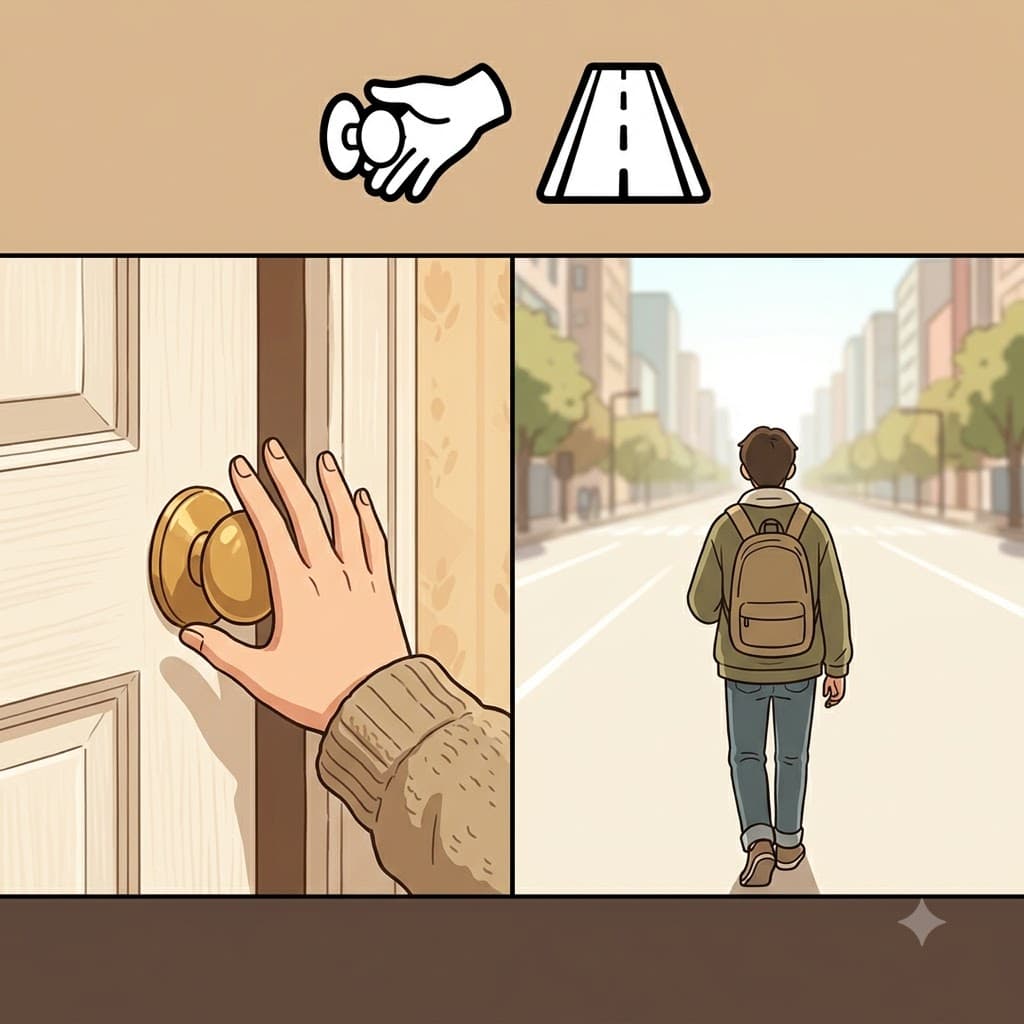
LE (let go) + AVE (avenue) — by letting go (LE) of the handle and walking down the avenue (AVE), he decided to leave.

Tugging gently on his sleeve and refusing to believe the news, she begged him not to leave.
Got the picture? Now let's practice.
🎤Pronunciation
🌳Etymology
Origin
The word derives from Old English 'laefan', meaning 'to leave behind' or 'to allow/permit'. It comes from a common Germanic root and has evolved to encompass the meaning 'to depart' alongside its original sense of abandonment or permission.
Breakdown
laefan (Old English root) breaks down into the Germanic base meaning 'to leave behind' or 'to allow', with the suffix -an indicating the infinitive form in Old English.
🎵Rhyme
🔗Collocations
📝Examples
“My cat always leaves dead mice at my door like expensive gifts.”
“Don't leave your homework until the last minute.”
“He left his wallet at home and had to eat instant noodles for lunch.”
“Please leave your shoes at the entrance.”
📚Related Words
Want to master 27,000+ words?
Sign up free for flashcards & quizzes.