disability — a physical or mental condition that limits a person's movements, senses, or activities
Part of speech: NOUN
Definition: a physical or mental condition that limits a person's movements, senses, or activities
Pronunciation (IPA): /ˌdɪsəˈbɪləti/
Example Sentences
- His superhero power was turning his disability into his greatest ability - he could park anywhere!
- The new building design ensures accessibility for people with disabilities.
- She refused to let her disability define her limitations.
disability
NOUN[/ˌdɪsəˈbɪləti/]
a physical or mental condition that limits a person's movements, senses, or activities
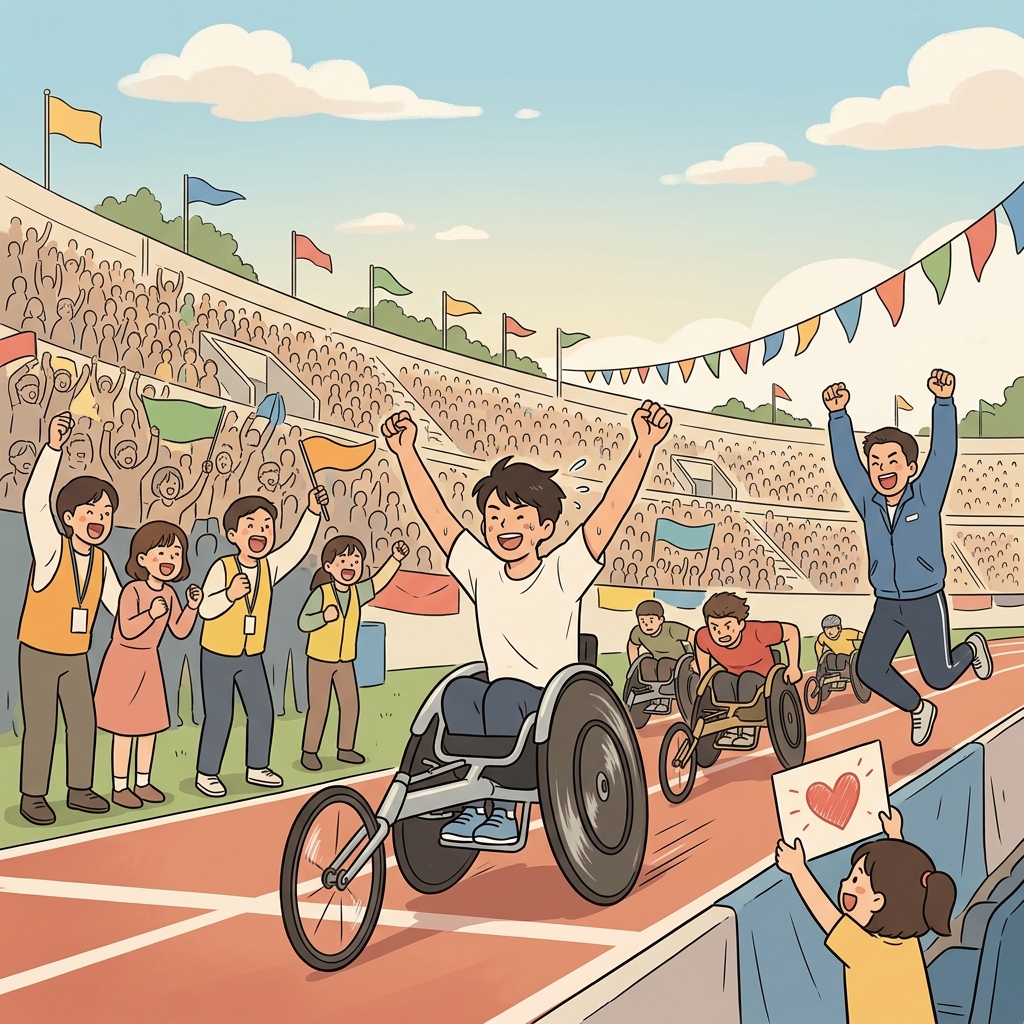
His disability doesn't stop him from winning the wheelchair race.
Got the picture? Now let's practice.
🎤Pronunciation
🌳Etymology
Origin
Derived from Latin dis- (negation) and habilis (able, capable), meaning 'lack of ability or capability.' The word evolved through Medieval French before acquiring its modern English form, developing into a noun denoting the state of being unable to perform certain functions.
Breakdown
dis- (not, negation) + ability (from Latin habilis, capable) + -ity (state or condition). The suffix -ity transforms the adjective into an abstract noun expressing the condition of lacking capacity.
🎵Rhyme
🔗Collocations
📝Examples
“His superhero power was turning his disability into his greatest ability - he could park anywhere!”
“The new building design ensures accessibility for people with disabilities.”
“She refused to let her disability define her limitations.”
“The app was designed to help people with visual disabilities navigate the city.”
📚Related Words
Synonyms
Antonyms
Related
Want to master 19,000+ words?
Sign up free for flashcards & quizzes.