thought pattern — a habitual or characteristic way of thinking about something, often repeated automatically
Part of speech: NOUN
Definition: a habitual or characteristic way of thinking about something, often repeated automatically
Pronunciation (IPA): /θɔːt ˈpætərn/
Example Sentences
- My cat has a very predictable thought pattern: eat, sleep, judge me silently, repeat.
- Therapists often ask patients to describe their recurring thought patterns.
- After years of the same thought pattern, he finally realized he always blamed traffic for being late, even when he left home two hours early.
thought pattern
NOUN[/θɔːt ˈpætərn/]
a habitual or characteristic way of thinking about something, often repeated automatically
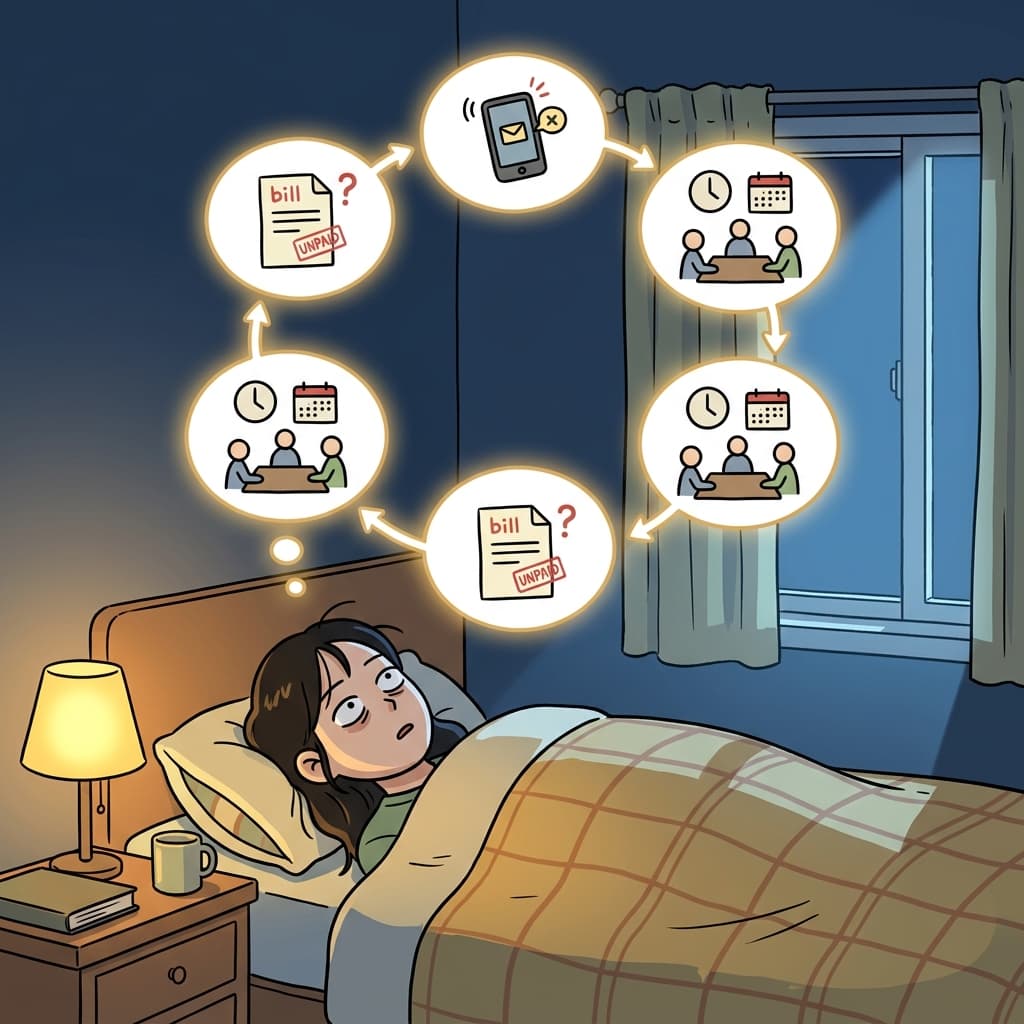
Her repeating thought pattern always circles back to the same worry before bed.
Got the picture? Now let's practice.
🎤Pronunciation
🌳Etymology
Origin
Thought derives from Old English þoht, the nominal form of þencan (to think). Pattern comes from Old French patron, meaning example or model. The compound thought pattern emerged in modern English to denote recurring mental frameworks or habitual ways of thinking.
Breakdown
thought (Old English þencan, to think + -t, nominalizing suffix) + pattern (Old French patron, model or example). Together they form a compound noun describing repetitive cognitive structures or mental habits.
🎵Rhyme
🔗Collocations
📝Examples
“My cat has a very predictable thought pattern: eat, sleep, judge me silently, repeat.”
“Therapists often ask patients to describe their recurring thought patterns.”
“After years of the same thought pattern, he finally realized he always blamed traffic for being late, even when he left home two hours early.”
“Public officials must break free from rigid thought patterns to solve modern policy problems.”
📚Related Words
Want to master 27,000+ words?
Sign up free for flashcards & quizzes.