critique — a detailed analysis and assessment of something, especially a literary, philosophical, or political theory
Part of speech: NOUN
Definition: a detailed analysis and assessment of something, especially a literary, philosophical, or political theory
Pronunciation (IPA): /krɪˈtiːk/
Example Sentences
- My mom's critique of my cooking was so detailed, she even analyzed the salt-to-pepper ratio.
- The art student's critique of the Mona Lisa: 'She needs better lighting for her selfie.'
- The literary critique revealed hidden themes in the novel.
critique
NOUN[/krɪˈtiːk/]
a detailed analysis and assessment of something, especially a literary, philosophical, or political theory

The professor offers a sharp critique of the student's painting during class.
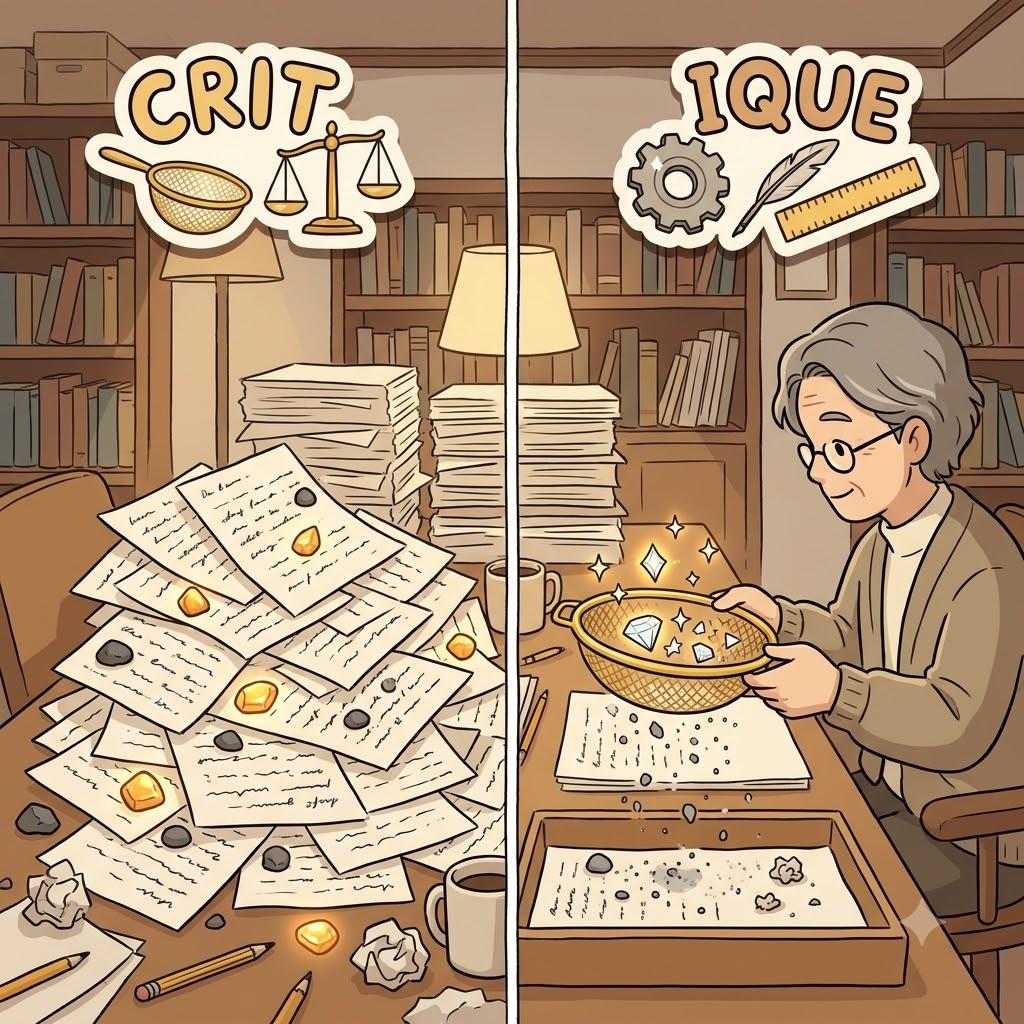
CRIT (sift and judge) + IQUE (expert technique) — using an IQUE (expert technique) to CRIT (sift and judge) strong ideas from weak ones, the editor offered a fair critique of the manuscript.

Praising the unique roof shape and clever building technique, the senior architects gathered around the table to critique the student's bridge model.
Got the picture? Now let's practice.
🎤Pronunciation
🌳Etymology
Origin
From French 'critique', which derives from Greek 'kritikos' meaning 'able to discern or judge', related to 'krinein' meaning 'to separate or judge'. The word entered English in the 17th century through French.
Breakdown
Greek 'krinein' (to judge, separate) + '-ique/-ic' (adjective suffix) = critique (a judgment or critical assessment)
🎵Rhyme
🔗Collocations
📝Examples
“My mom's critique of my cooking was so detailed, she even analyzed the salt-to-pepper ratio.”
“The art student's critique of the Mona Lisa: 'She needs better lighting for her selfie.'”
“The literary critique revealed hidden themes in the novel.”
“Students must critique each other's presentations during the workshop.”
📚Related Words
Want to master 17,000+ words?
Sign up free for flashcards & quizzes.