besiege — to surround a place with armed forces in order to capture it or force its surrender
Part of speech: VERB
Definition: to surround a place with armed forces in order to capture it or force its surrender
Pronunciation (IPA): /bɪˈsiːdʒ/
Example Sentences
- The paparazzi besieged the restaurant where the famous couple was dining.
- My mom besieged me with questions about why I came home so late.
- The medieval army besieged the enemy castle using catapults and battering rams.
besiege
VERB[/bɪˈsiːdʒ/]
to surround a place with armed forces in order to capture it or force its surrender

Knights besiege the castle walls for weeks until the gates finally crack open.

BE(around) + SIEGE — the soldiers besiege the fortress by surrounding every side.
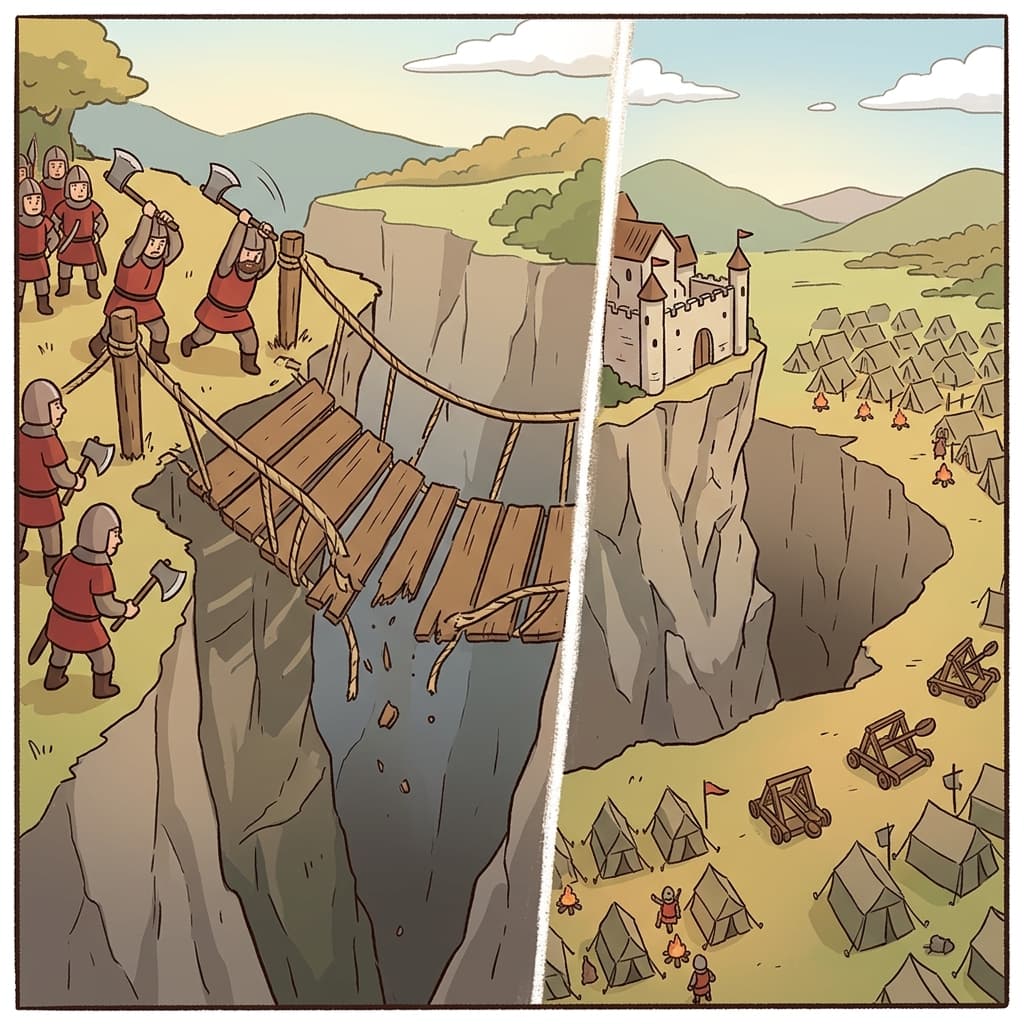
After the bridge collapsed, the enemy besieged the isolated castle.
Got the picture? Now let's practice.
🎤Pronunciation
🌳Etymology
Origin
From Old French 'besieger', composed of the prefix 'be-' (to make or cause) combined with 'siege' (from Latin 'sedere' meaning 'to sit'). The word evolved to mean surrounding a place with armed forces, derived from the concept of 'sitting' around a fortification.
Breakdown
be- (to make/cause) + siege (from Latin sedere, to sit) = besiege (to surround and occupy a place with armed forces)
🎵Rhyme
🔗Collocations
📝Examples
“The paparazzi besieged the restaurant where the famous couple was dining.”
“My mom besieged me with questions about why I came home so late.”
“The medieval army besieged the enemy castle using catapults and battering rams.”
“Students besieged the professor's office hours before the final exam.”
📚Related Words
Want to master 27,000+ words?
Sign up free for flashcards & quizzes.