impassive — not showing or feeling emotion; calm and unmoved
Part of speech: ADJECTIVE
Definition: not showing or feeling emotion; calm and unmoved
Pronunciation (IPA): /ɪmˈpæsɪv/
Example Sentences
- The poker player kept an impassive face even with a royal flush in hand.
- My cat remained impassive when I showed her the expensive toy I bought.
- The judge listened to the testimony with an impassive expression.
impassive
ADJECTIVE[/ɪmˈpæsɪv/]
not showing or feeling emotion; calm and unmoved

The royal guard remained completely impassive while the tourist made funny faces.
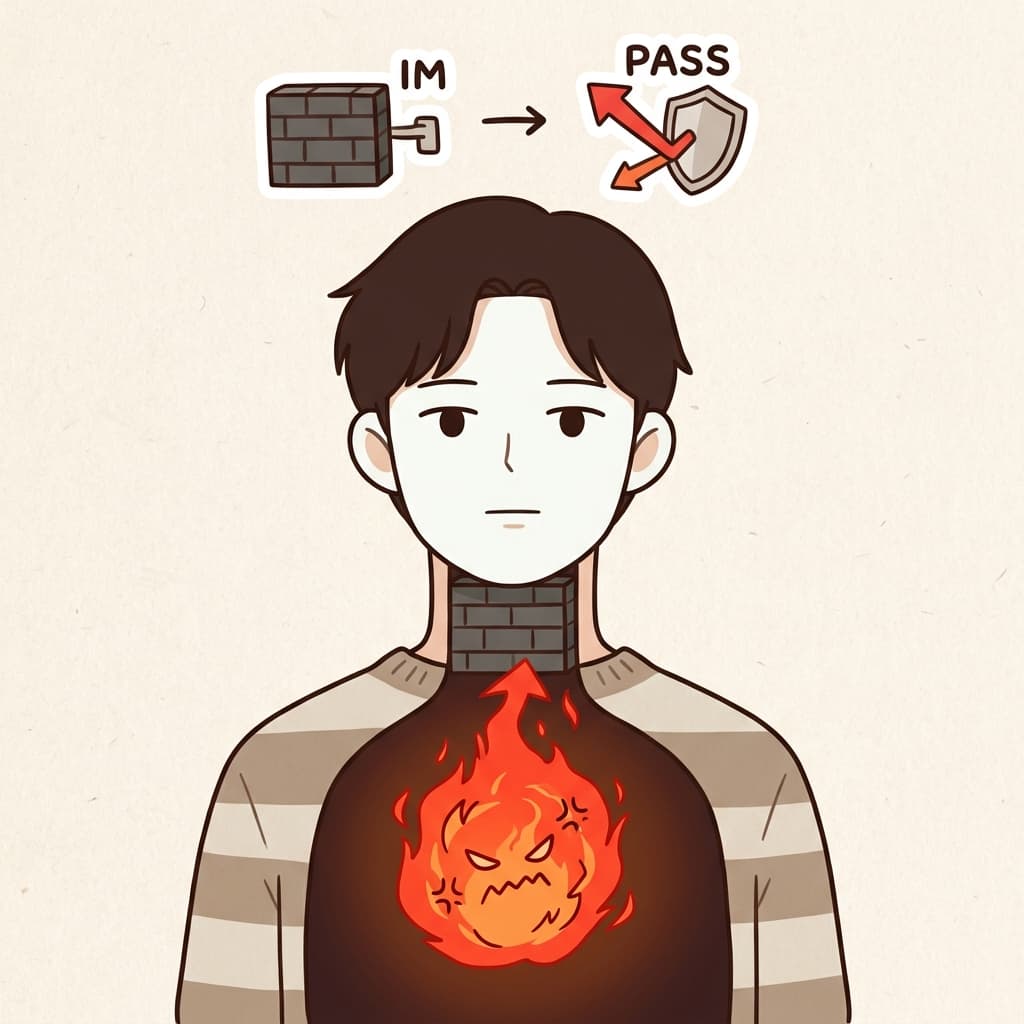
IM(not) + PASS(pass) — he did NOT let any emotion PASS through to his face, remaining totally impassive.

Standing directly in front of the massive monster, the hero surprisingly remained completely impassive.
Got the picture? Now let's practice.
🎤Pronunciation
🌳Etymology
Origin
From Latin 'impassivus', derived from the prefix 'im-' (not) combined with 'passivus' (capable of feeling or suffering), which comes from 'pati' meaning 'to suffer or endure'.
Breakdown
im- (not) + passive (capable of feeling) = impassive
🎵Rhyme
🔗Collocations
📝Examples
“The poker player kept an impassive face even with a royal flush in hand.”
“My cat remained impassive when I showed her the expensive toy I bought.”
“The judge listened to the testimony with an impassive expression.”
“Despite winning the lottery, he remained surprisingly impassive.”
📚Related Words
Want to master 27,000+ words?
Sign up free for flashcards & quizzes.